


Home
/
Blogs
/
Anti-Aging
/
The 1% Rule: Why Your Skin Loses Collagen Every Year and How to Slow It
5 min read
The 1% Rule: Why Your Skin Loses Collagen Every Year and How to Slow It
There's a number that every dermatologist knows but most skincare marketing ignores: after about age 25, collagen production declines at roughly 1% per year. It doesn't sound like much. But it compounds.
By 40, you've lost around 15%. By 50, roughly 25%. By 60, it's approaching 40%. The visible result is what most people call "aging" — thinner skin, fine lines, reduced firmness, slower wound healing, and that general loss of the bounce and resilience your skin had in your twenties.
Understanding what's actually happening at the cellular level changes how you approach the problem.
By 40, you've lost around 15%. By 50, roughly 25%. By 60, it's approaching 40%. The visible result is what most people call "aging" — thinner skin, fine lines, reduced firmness, slower wound healing, and that general loss of the bounce and resilience your skin had in your twenties.
Understanding what's actually happening at the cellular level changes how you approach the problem.
What collagen does and why it declines
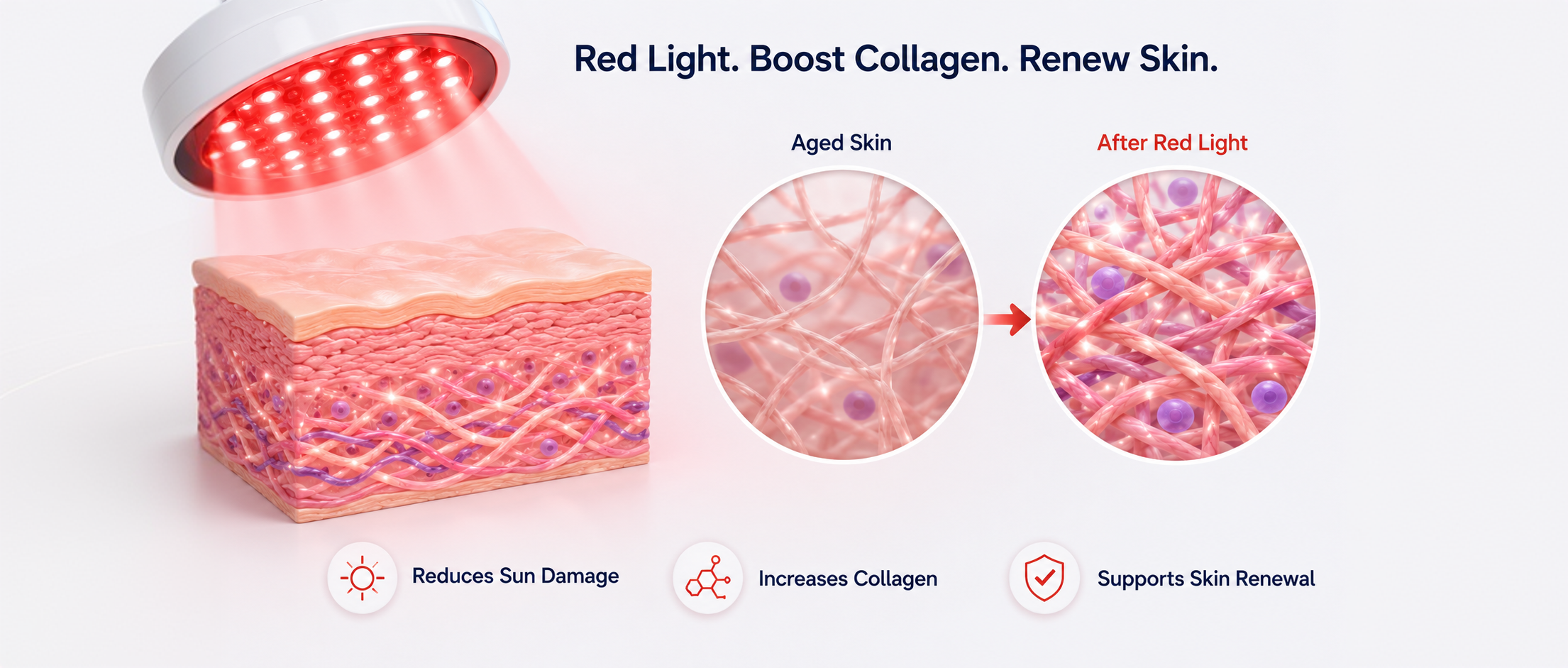
Collagen is the primary structural protein in your dermis — the thick middle layer of skin. It's produced by cells called fibroblasts. Think of collagen as the scaffolding that keeps your skin firm, plump, and elastic.
The decline happens for two reasons. First, fibroblasts become less active with age — they simply produce less collagen per cell. Second, existing collagen is degraded faster by enzymes called matrix metalloproteinases (MMPs), and the balance between production and degradation shifts unfavorably.
UV exposure, smoking, poor sleep, high-sugar diets, and chronic stress all accelerate this process. UV is the biggest external factor — it's why dermatologists call sun damage "photoaging" and why SPF is the most evidence-backed anti-aging intervention that exists.
A 2021 transcriptome analysis of human dermal fibroblasts found that red light therapy actually increased expression of MMP1 — an enzyme responsible for collagen remodeling — suggesting that photobiomodulation may help the skin's natural repair and renewal process (PMC, 2021).
The decline happens for two reasons. First, fibroblasts become less active with age — they simply produce less collagen per cell. Second, existing collagen is degraded faster by enzymes called matrix metalloproteinases (MMPs), and the balance between production and degradation shifts unfavorably.
UV exposure, smoking, poor sleep, high-sugar diets, and chronic stress all accelerate this process. UV is the biggest external factor — it's why dermatologists call sun damage "photoaging" and why SPF is the most evidence-backed anti-aging intervention that exists.
A 2021 transcriptome analysis of human dermal fibroblasts found that red light therapy actually increased expression of MMP1 — an enzyme responsible for collagen remodeling — suggesting that photobiomodulation may help the skin's natural repair and renewal process (PMC, 2021).
What actually slows collagen loss
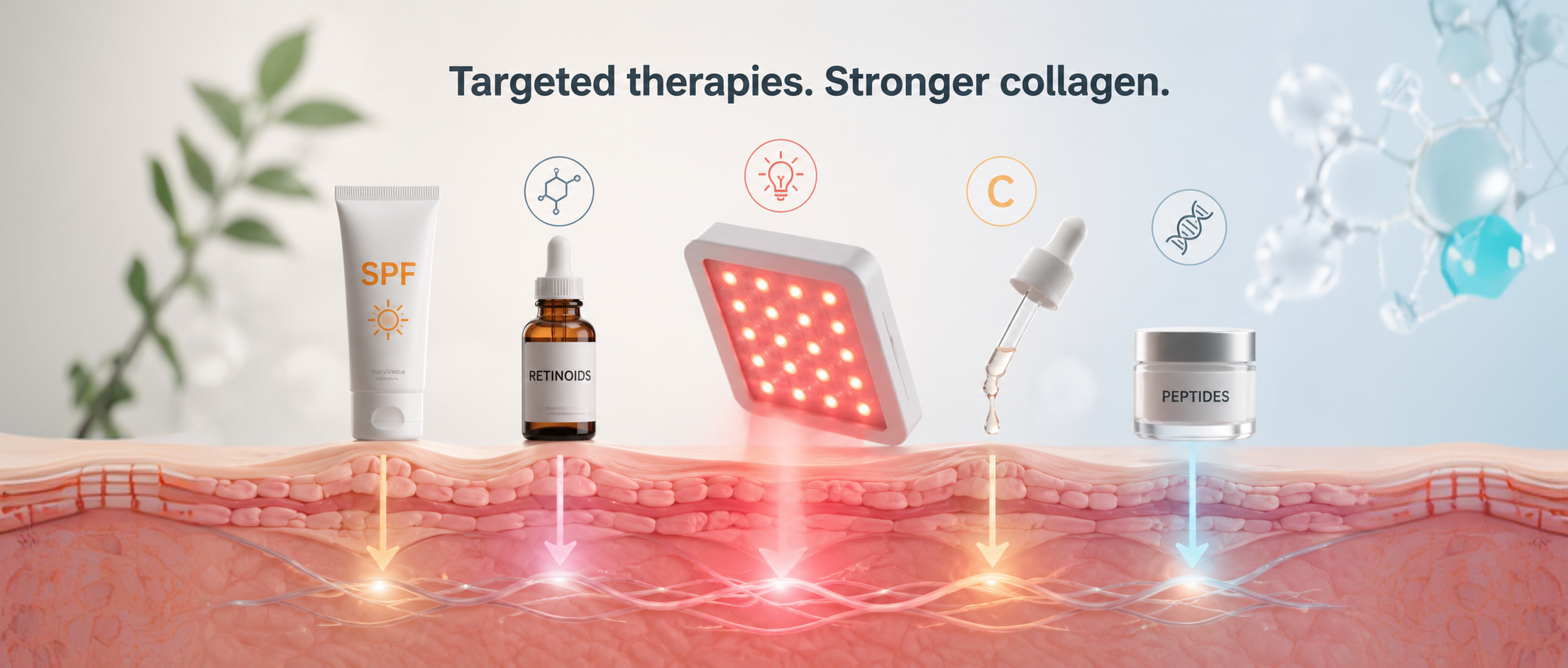
Not all interventions are equal. Here's what the evidence supports, ranked by strength of data:
SPF (daily sunscreen): The single most effective anti-aging measure. UV radiation is the dominant external cause of collagen degradation. Consistent daily SPF use prevents further photoaging and allows existing repair mechanisms to work without constant UV damage undoing them.
Retinoids (tretinoin, retinol): The most evidence-backed topical for stimulating collagen production. Prescription tretinoin has decades of trial data showing increased dermal collagen, reduced wrinkle depth, and improved skin texture.
Red light therapy (photobiomodulation): A 2019 JAAD study demonstrated that low-level red and infrared light significantly increased expression of collagen, elastin, and hyaluronic acid in human skin (JAAD, 2019). The Wunsch & Matuschka RCT (2014) confirmed measurable intradermal collagen density increases after 30 weeks of treatment with 633nm and 830nm light (Wunsch & Matuschka, 2014).
The mechanism is complementary to retinoids: while retinoids signal fibroblasts to produce more collagen at the gene expression level, red light therapy provides the mitochondrial energy (ATP) those fibroblasts need to actually execute that production (Hamblin, 2017). Using both is addressing the problem from two angles.
Vitamin C (topical): A cofactor in collagen synthesis — specifically required for the hydroxylation of proline and lysine residues during collagen assembly. Not a standalone solution, but it directly supports collagen production when fibroblasts are active.
Peptides: Some evidence for signaling collagen production, but data is thinner than for retinoids or light therapy.
SPF (daily sunscreen): The single most effective anti-aging measure. UV radiation is the dominant external cause of collagen degradation. Consistent daily SPF use prevents further photoaging and allows existing repair mechanisms to work without constant UV damage undoing them.
Retinoids (tretinoin, retinol): The most evidence-backed topical for stimulating collagen production. Prescription tretinoin has decades of trial data showing increased dermal collagen, reduced wrinkle depth, and improved skin texture.
Red light therapy (photobiomodulation): A 2019 JAAD study demonstrated that low-level red and infrared light significantly increased expression of collagen, elastin, and hyaluronic acid in human skin (JAAD, 2019). The Wunsch & Matuschka RCT (2014) confirmed measurable intradermal collagen density increases after 30 weeks of treatment with 633nm and 830nm light (Wunsch & Matuschka, 2014).
The mechanism is complementary to retinoids: while retinoids signal fibroblasts to produce more collagen at the gene expression level, red light therapy provides the mitochondrial energy (ATP) those fibroblasts need to actually execute that production (Hamblin, 2017). Using both is addressing the problem from two angles.
Vitamin C (topical): A cofactor in collagen synthesis — specifically required for the hydroxylation of proline and lysine residues during collagen assembly. Not a standalone solution, but it directly supports collagen production when fibroblasts are active.
Peptides: Some evidence for signaling collagen production, but data is thinner than for retinoids or light therapy.
Where red light therapy fits in the collagen stack
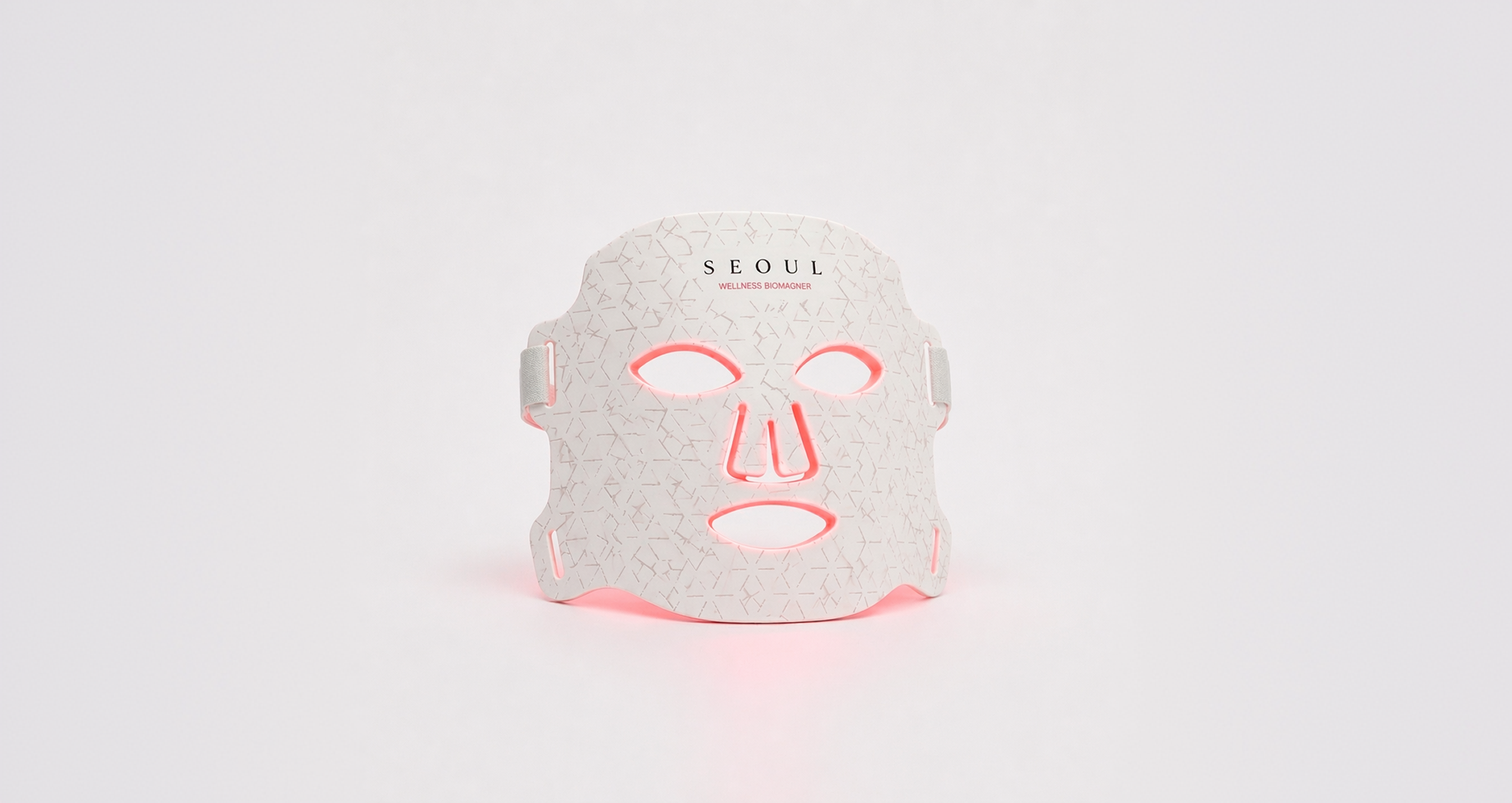
The Red Light Face Mask delivers the same wavelengths validated in the clinical literature — 630nm red and 830nm near-infrared — with full-face coverage for consistent treatment.
A practical anti-collagen-loss routine:
Morning: Vitamin C serum → moisturizer → SPF 30+. Non-negotiable daily.
Evening (3–4x/week): Cleanse → Red Light Face Mask for 15–20 minutes on clean skin → apply retinol serum after the session. The Red Light Eye Bag Glasses can be used on alternate evenings for the delicate periorbital area.
The key insight: Collagen loss is a daily, compounding process. The most effective defense is also daily and compounding — consistent, sustained interventions that match the pace of decline. A $10,000 laser treatment once a year is less effective than a daily 15-minute protocol that runs 365 days.
A practical anti-collagen-loss routine:
Morning: Vitamin C serum → moisturizer → SPF 30+. Non-negotiable daily.
Evening (3–4x/week): Cleanse → Red Light Face Mask for 15–20 minutes on clean skin → apply retinol serum after the session. The Red Light Eye Bag Glasses can be used on alternate evenings for the delicate periorbital area.
The key insight: Collagen loss is a daily, compounding process. The most effective defense is also daily and compounding — consistent, sustained interventions that match the pace of decline. A $10,000 laser treatment once a year is less effective than a daily 15-minute protocol that runs 365 days.
Disclaimer
The content provided in this blog is for informational and educational purposes only. It is not intended to be a substitute for professional medical advice, diagnosis, or treatment.
Recent Posts
Browse Related Products

Join The Red Light Reset
Get science-backed skincare insights, expert guides, and early access to new device launches.
No spam. Just clinically-informed education and member-only benefits