

Home
/
Blogs
/
Hair Growth
/
Red Light Cap vs Minoxidil vs Finasteride
5 min read
Red Light Cap vs Minoxidil vs Finasteride: Which Actually Works Best?
If you're researching hair loss treatments, you've likely landed on three options: minoxidil (Rogaine), finasteride (Propecia), and red light therapy (LLLT). Each works through a completely different biological mechanism, which means they're not interchangeable — and they can actually be combined.
Here's how they compare, side by side.
How each one works
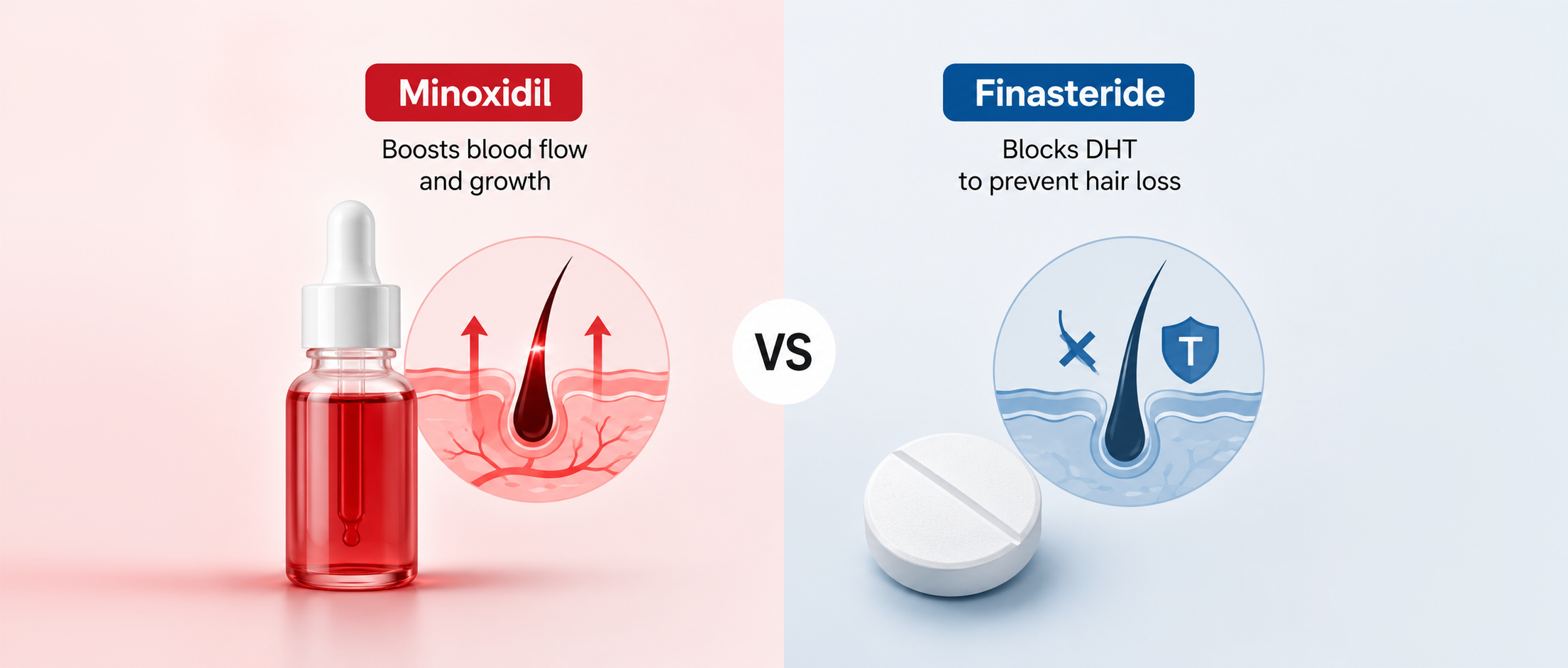
Minoxidil is a topical vasodilator. Applied to the scalp, it widens blood vessels, increasing blood flow and nutrient delivery to follicles. It also appears to extend the anagen (growth) phase. It's FDA-approved for both men and women. The main downside: it must be applied daily, it can cause scalp irritation or dryness, and some users experience initial shedding.
Finasteride is an oral medication that blocks the conversion of testosterone to DHT (dihydrotestosterone), the hormone primarily responsible for follicle miniaturization in androgenetic alopecia. It's FDA-approved for men only. It's effective — but it carries a risk of sexual side effects (decreased libido, erectile dysfunction) that affects a small but real percentage of users. Women of childbearing age cannot use it due to teratogenic risks.
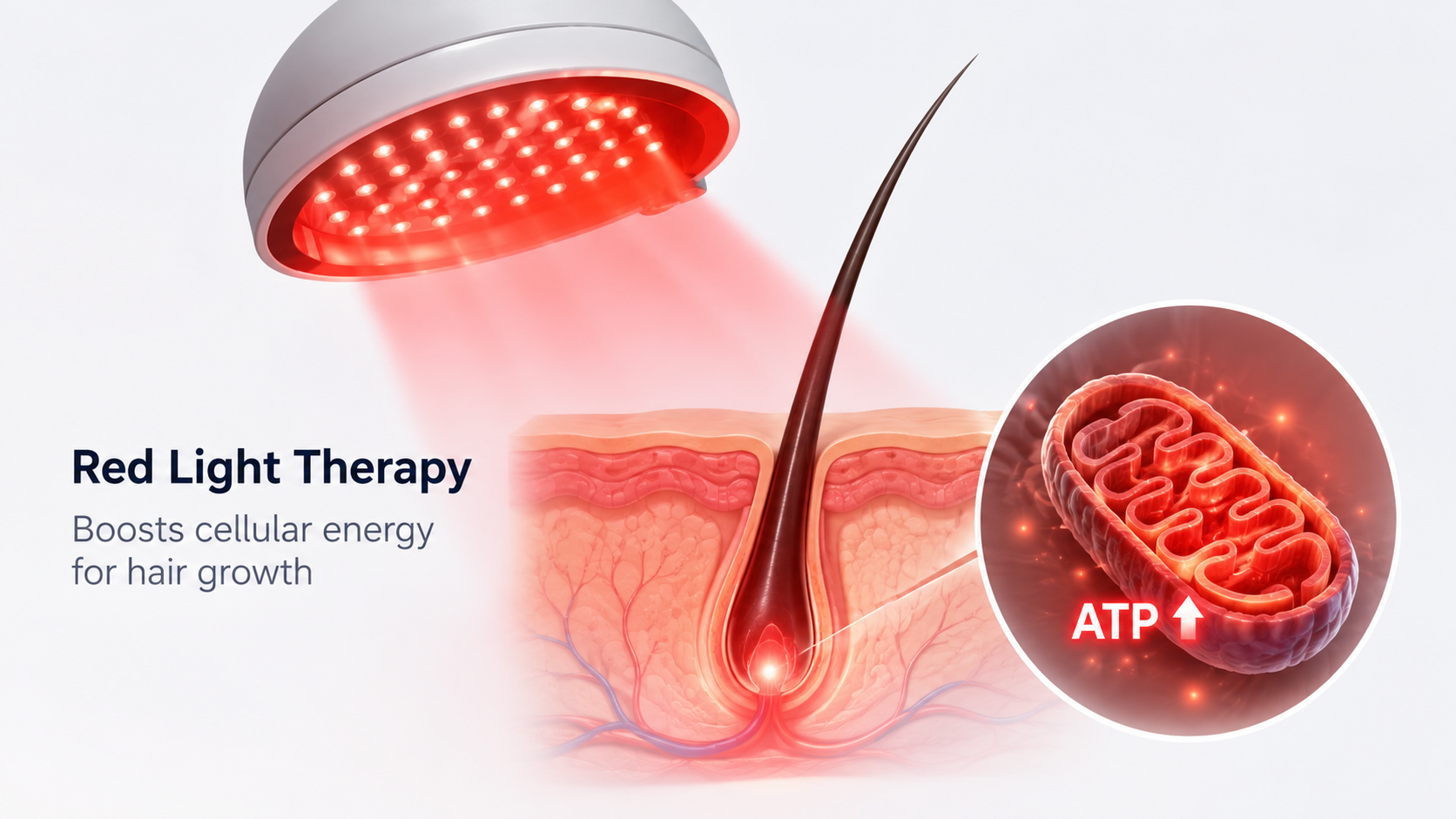
Red light therapy (LLLT) uses 630–670nm wavelengths to stimulate mitochondrial activity in the follicle, increasing ATP production and triggering cellular proliferation. It works through photobiomodulation — completely different from the chemical pathways of the two drugs.
What the efficacy data shows
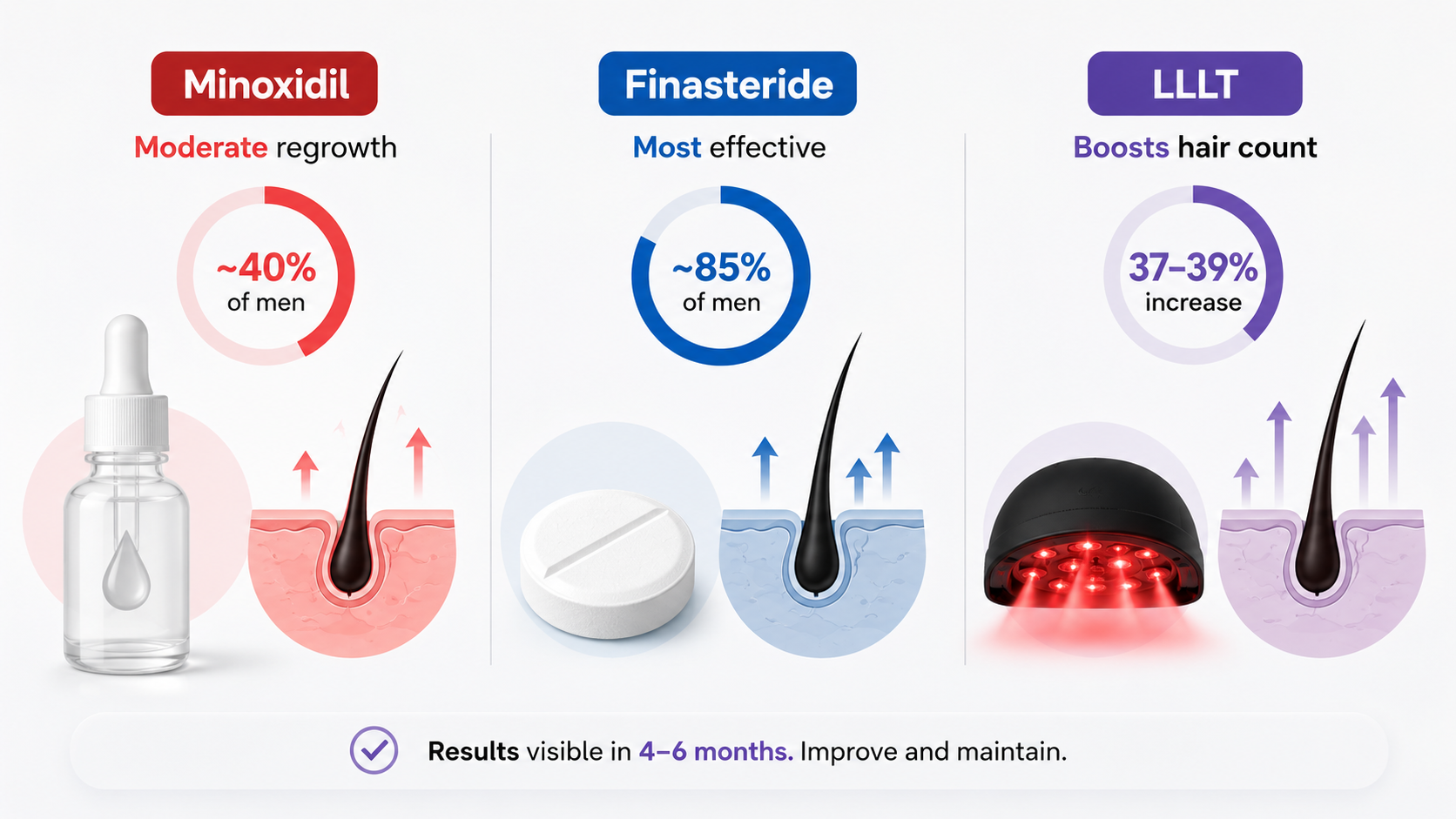
Minoxidil: In clinical trials, 5% topical minoxidil produces moderate hair regrowth in approximately 40% of male users and meaningful slowing of hair loss in a larger percentage. Results require 4–6 months to appear and reverse upon stopping.
Finasteride: Clinical trials show that 1mg daily finasteride increases hair count by roughly 10–15% at 12 months and slows further loss in approximately 85% of men. It's generally considered the most effective single pharmaceutical treatment for male pattern hair loss.
LLLT: The Lanzafame RCTs showed 37–39% increases in hair count at 16 weeks in both men and women (Lanzafame, 2013; Lanzafame, 2014). A 2025 meta-analysis of FDA-cleared devices confirmed statistically significant improvement across most studies (JCAD). Results also reverse upon stopping.
Finasteride: Clinical trials show that 1mg daily finasteride increases hair count by roughly 10–15% at 12 months and slows further loss in approximately 85% of men. It's generally considered the most effective single pharmaceutical treatment for male pattern hair loss.
LLLT: The Lanzafame RCTs showed 37–39% increases in hair count at 16 weeks in both men and women (Lanzafame, 2013; Lanzafame, 2014). A 2025 meta-analysis of FDA-cleared devices confirmed statistically significant improvement across most studies (JCAD). Results also reverse upon stopping.
Side effects compared
Minoxidil: Scalp irritation, dryness, flaking, initial shedding phase. Rare: unwanted facial hair growth, dizziness. No systemic hormonal effects.
Finasteride: Sexual side effects (1–3% of users in trials): decreased libido, erectile dysfunction. Rare reports of persistent effects post-discontinuation remain debated in the literature. Mood changes reported by some users. Cannot be handled by pregnant women.
LLLT: No systemic side effects reported in any published clinical trial. The Cleveland Clinic notes only occasional mild scalp redness or warmth. The American Hair Loss Association confirms the excellent safety profile of FDA-cleared devices.
Finasteride: Sexual side effects (1–3% of users in trials): decreased libido, erectile dysfunction. Rare reports of persistent effects post-discontinuation remain debated in the literature. Mood changes reported by some users. Cannot be handled by pregnant women.
LLLT: No systemic side effects reported in any published clinical trial. The Cleveland Clinic notes only occasional mild scalp redness or warmth. The American Hair Loss Association confirms the excellent safety profile of FDA-cleared devices.
Cost over time
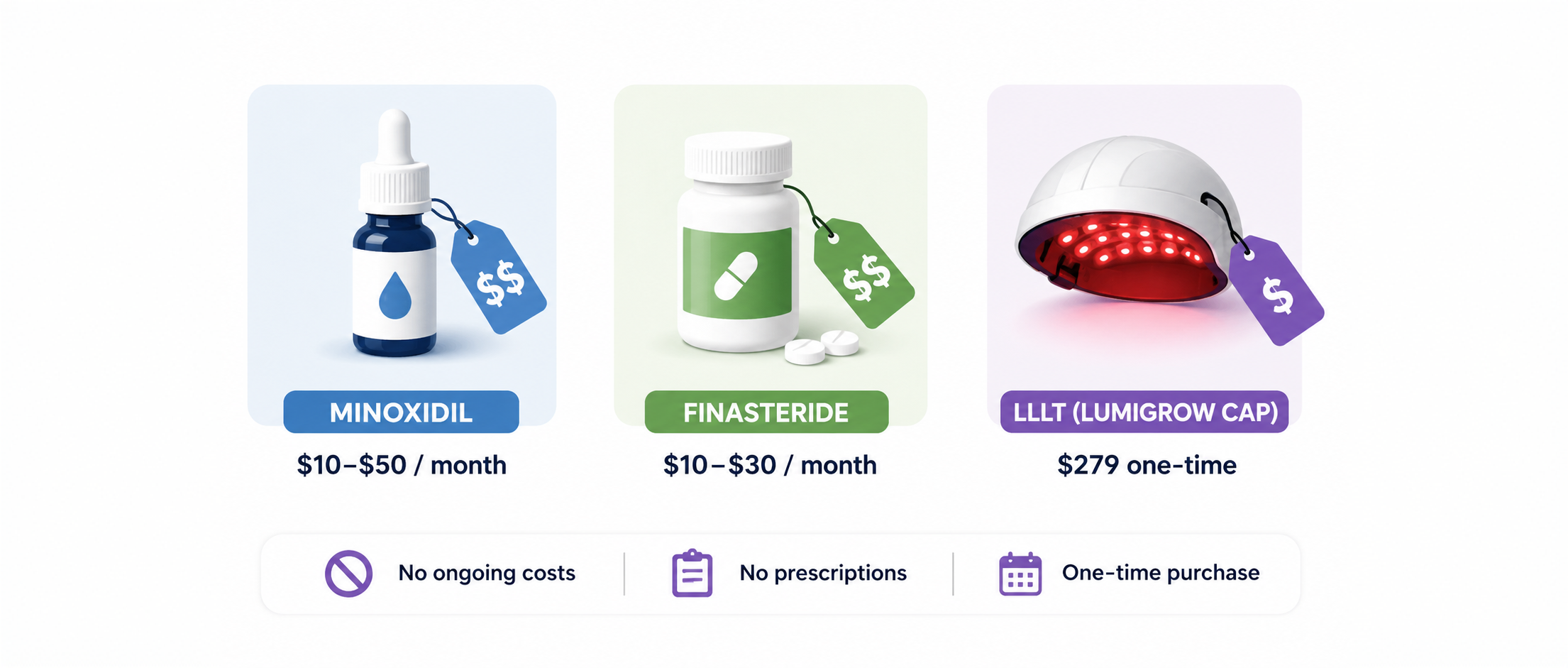
Minoxidil: $10–$50/month for generic topical solution. Over 3 years: $360–$1,800. Ongoing indefinitely.
Finasteride: $10–$30/month for generic oral tablets. Over 3 years: $360–$1,080. Ongoing indefinitely. Requires prescription and monitoring.
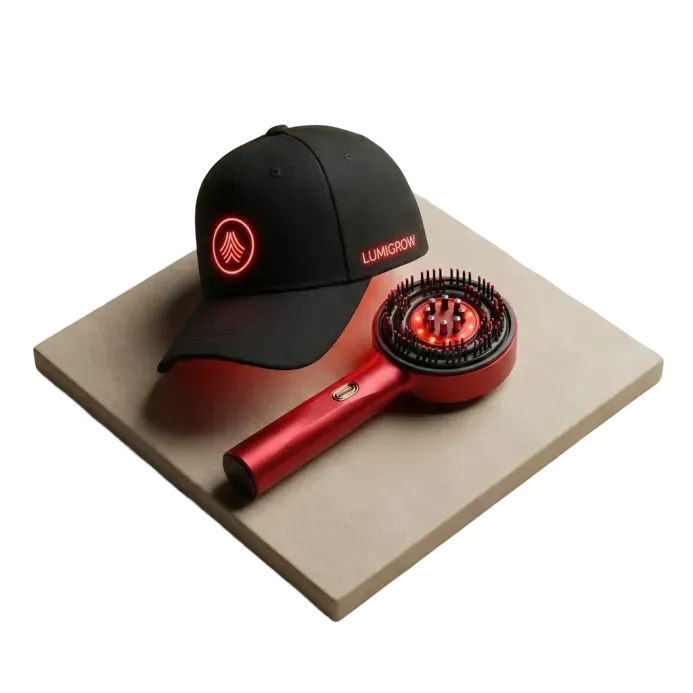
LLLT (Lumigrow Cap): $279 one-time purchase. No refills, no prescriptions, no ongoing costs. The device pays for itself versus minoxidil within 6–12 months and versus finasteride within 12–18 months.
Finasteride: $10–$30/month for generic oral tablets. Over 3 years: $360–$1,080. Ongoing indefinitely. Requires prescription and monitoring.
LLLT (Lumigrow Cap): $279 one-time purchase. No refills, no prescriptions, no ongoing costs. The device pays for itself versus minoxidil within 6–12 months and versus finasteride within 12–18 months.
Can you combine them?
Yes — and specialists often recommend it. Because each treatment works through a different mechanism (vasodilation, DHT blocking, photobiomodulation), they don't interfere with each other and may produce additive effects.
Research supports combining LLLT with minoxidil and/or finasteride for enhanced outcomes (Cosmedica, 2026). As DCReport notes, specialists typically position LLLT as a complement rather than a replacement for pharmaceutical treatments.
A practical combination protocol:
Morning: Apply minoxidil
Evening: 15–20 minutes with the Lumigrow Cap
Daily (if prescribed): Finasteride tablet
Weekly: Red Light Scalp Massager for enhanced circulation
Research supports combining LLLT with minoxidil and/or finasteride for enhanced outcomes (Cosmedica, 2026). As DCReport notes, specialists typically position LLLT as a complement rather than a replacement for pharmaceutical treatments.
A practical combination protocol:
Morning: Apply minoxidil
Evening: 15–20 minutes with the Lumigrow Cap
Daily (if prescribed): Finasteride tablet
Weekly: Red Light Scalp Massager for enhanced circulation
The bottom line
There's no single "best" treatment — it depends on your priorities:
If you want the lowest-risk option with zero side effects, start with LLLT. If you want the strongest pharmaceutical evidence for stopping DHT-driven loss, finasteride is hard to beat (for men). If you want an affordable topical that's easy to start, minoxidil is the default.
If you want the best shot at real results, combine two or three. Consult a dermatologist to build a protocol that matches your specific situation.
If you want the lowest-risk option with zero side effects, start with LLLT. If you want the strongest pharmaceutical evidence for stopping DHT-driven loss, finasteride is hard to beat (for men). If you want an affordable topical that's easy to start, minoxidil is the default.
If you want the best shot at real results, combine two or three. Consult a dermatologist to build a protocol that matches your specific situation.
Disclaimer
The content provided in this blog is for informational and educational purposes only. It is not intended to be a substitute for professional medical advice, diagnosis, or treatment.
Recent Posts


Browse Related Products

Join The Red Light Reset
Get science-backed skincare insights, expert guides, and early access to new device launches.
No spam. Just clinically-informed education and member-only benefits