

Home
/
Blogs
/
Science
/
FDA Cleared vs FDA Registered vs FDA Approved
5 min read
FDA Cleared vs FDA Registered vs FDA Approved: What's the Difference?
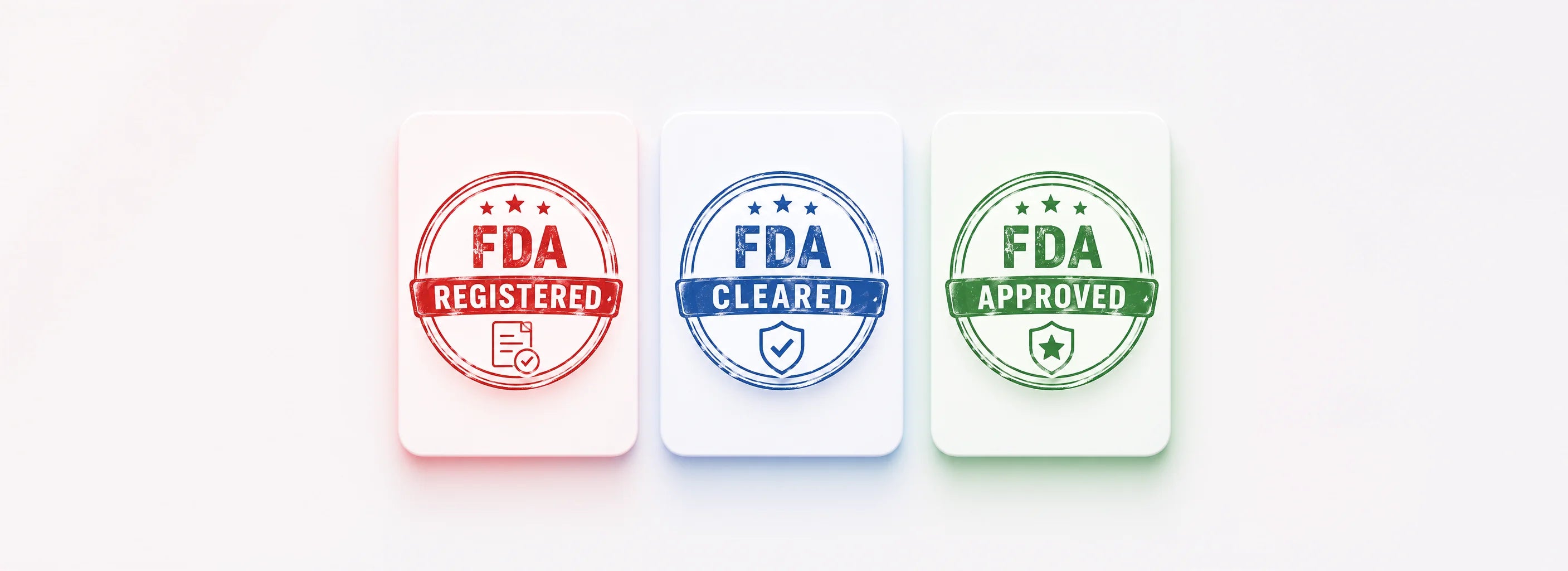
Search for any red light therapy device and you'll see "FDA" somewhere on the page. But the specific words around it matter enormously — and most brands either don't know the difference or deliberately blur the lines.
Here's a clear breakdown of three terms that sound similar but mean very different things.
Here's a clear breakdown of three terms that sound similar but mean very different things.
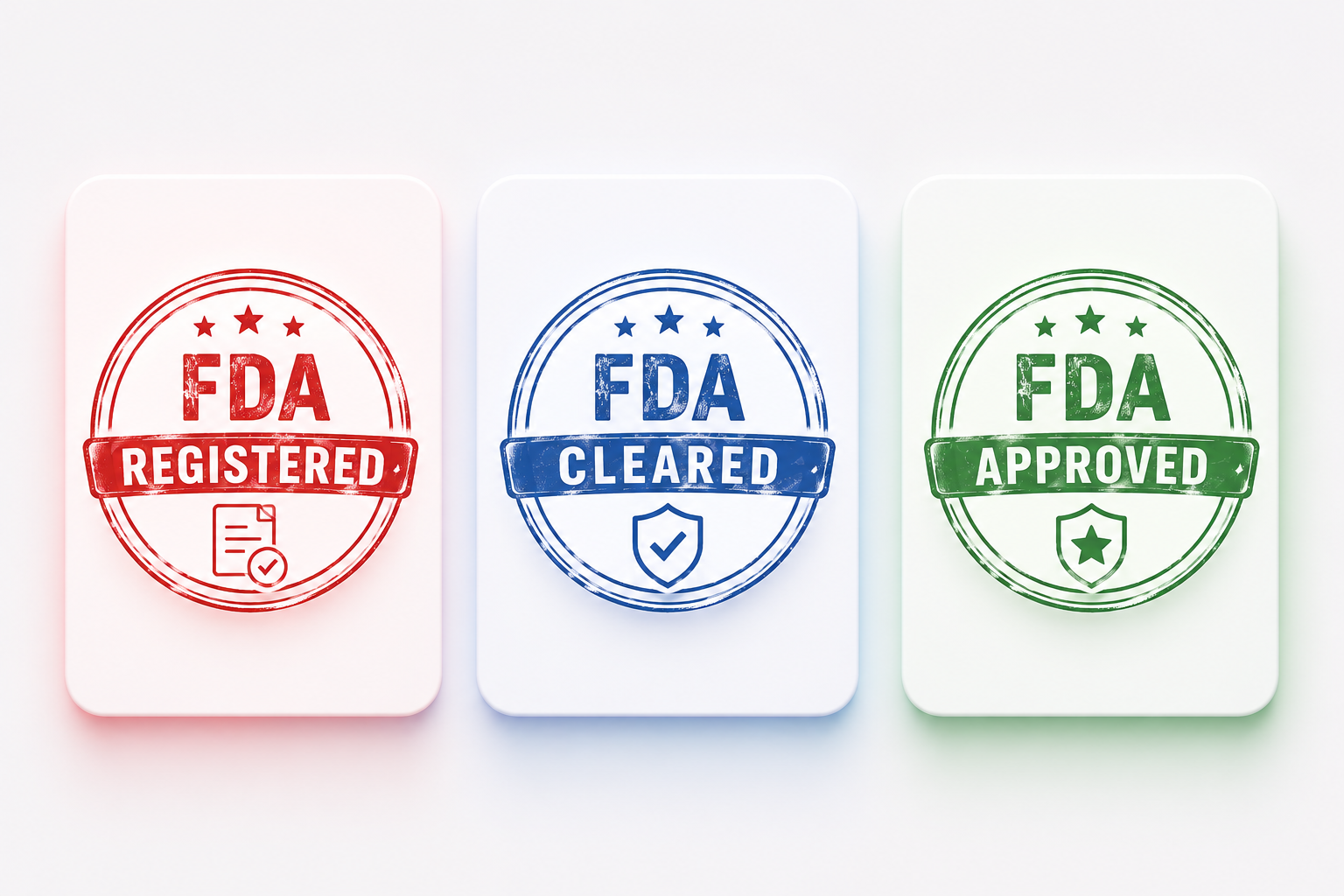
FDA-approved
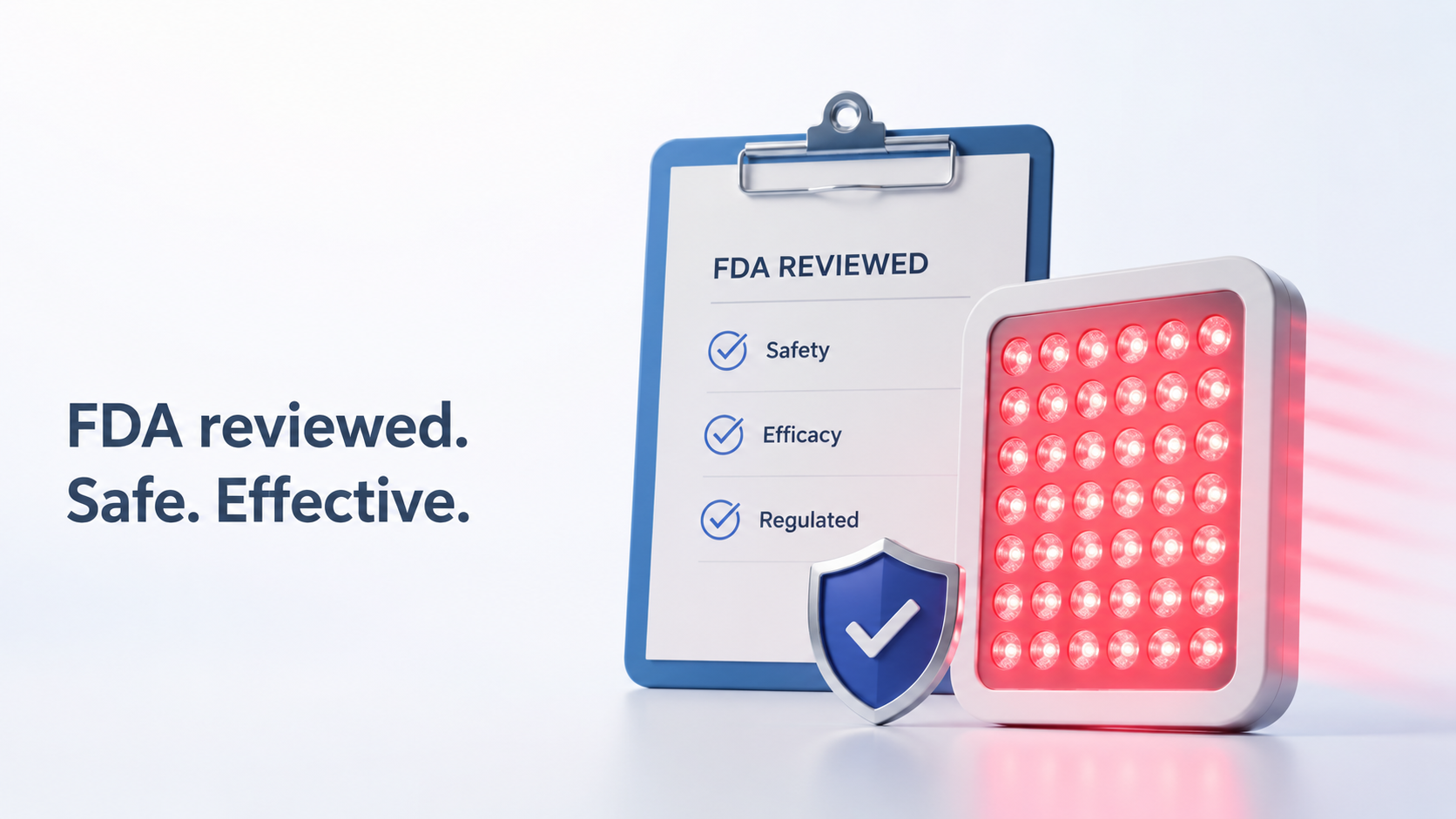
What it means: The FDA has reviewed extensive clinical trial data proving both safety and efficacy for a specific intended use. This is the highest regulatory bar. It applies primarily to pharmaceutical drugs and Class III (high-risk) medical devices like pacemakers and hip implants.
Does it apply to red light therapy devices? No. No consumer red light therapy device is FDA-approved. If a brand claims "FDA-approved" for their LED panel or laser cap, they're either misinformed or misleading you.
Does it apply to red light therapy devices? No. No consumer red light therapy device is FDA-approved. If a brand claims "FDA-approved" for their LED panel or laser cap, they're either misinformed or misleading you.
FDA-cleared (510(k))
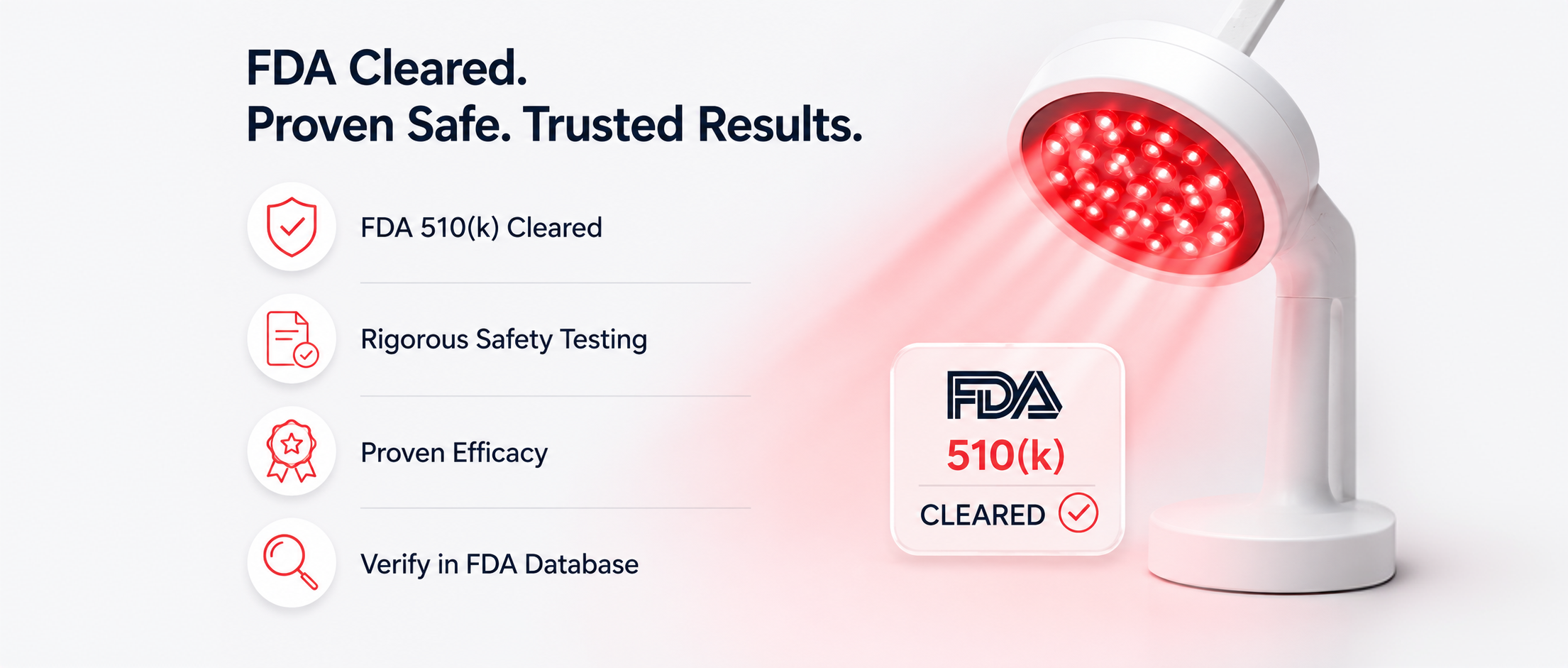
What it means: The manufacturer has submitted a premarket notification (called a 510(k)) demonstrating that their device is "substantially equivalent" to a legally marketed device already on the market. The FDA reviews the submission and, if satisfied, issues a clearance letter. This applies to Class II (moderate-risk) medical devices.
Does it apply to red light therapy devices? Yes — but only to specific devices that have gone through the process. Multiple LLLT devices for hair growth have received 510(k) clearance, meaning the FDA reviewed their safety data and agreed they could be marketed for that specific indication.
The American Hair Loss Association emphasizes this distinction: only devices that have been specifically cleared for hair growth have undergone rigorous testing for safety and efficacy. A 2025 meta-analysis found that as of January 2020, only 32 home-use LLLT devices had received FDA clearance.
How to verify: You can look up any device in the FDA's 510(k) database by searching the manufacturer name or product code.
Does it apply to red light therapy devices? Yes — but only to specific devices that have gone through the process. Multiple LLLT devices for hair growth have received 510(k) clearance, meaning the FDA reviewed their safety data and agreed they could be marketed for that specific indication.
The American Hair Loss Association emphasizes this distinction: only devices that have been specifically cleared for hair growth have undergone rigorous testing for safety and efficacy. A 2025 meta-analysis found that as of January 2020, only 32 home-use LLLT devices had received FDA clearance.
How to verify: You can look up any device in the FDA's 510(k) database by searching the manufacturer name or product code.
FDA-registered
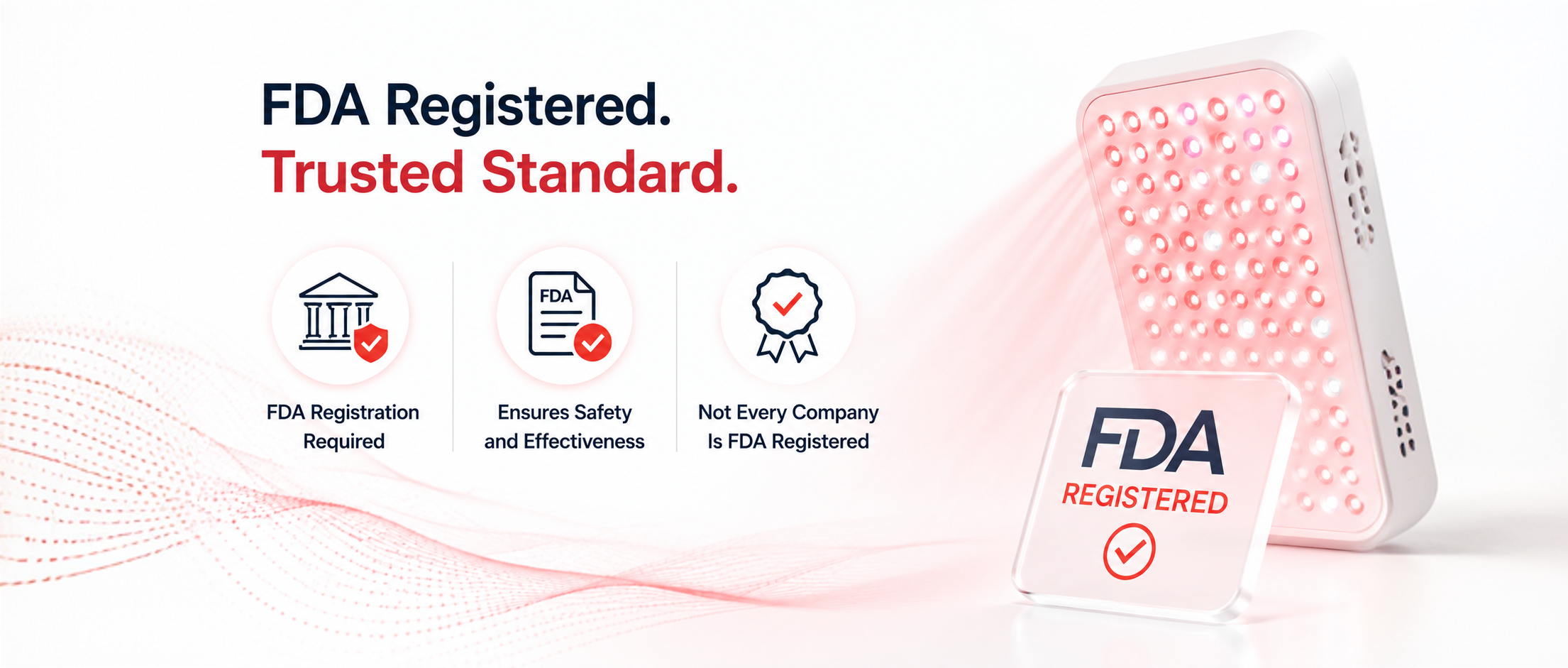
What it means: The manufacturer has registered their business establishment with the FDA and listed their device. This is a legal requirement for all medical device manufacturers selling in the US — it's an administrative step, not a review of the product.
Does it apply to red light therapy devices? Most are FDA-registered by default because the law requires it. But registration alone means the FDA has not reviewed the device for safety, efficacy, or any specific therapeutic claim. It simply means the FDA knows the company exists and what they're selling.
The critical distinction: "FDA-registered" sounds authoritative but provides zero assurance about whether the device works or is safe for its marketed purpose. Any company can register a device. Not every company can get one cleared.
Does it apply to red light therapy devices? Most are FDA-registered by default because the law requires it. But registration alone means the FDA has not reviewed the device for safety, efficacy, or any specific therapeutic claim. It simply means the FDA knows the company exists and what they're selling.
The critical distinction: "FDA-registered" sounds authoritative but provides zero assurance about whether the device works or is safe for its marketed purpose. Any company can register a device. Not every company can get one cleared.
Why this matters for your purchase decision
When evaluating a red light therapy device, especially at premium price points ($200–$900), here's what to look for:
Best case: The device has FDA 510(k) clearance for a specific indication (e.g., "treatment of androgenetic alopecia"). This means the FDA has reviewed safety data and the manufacturer has demonstrated substantial equivalence to a cleared predicate device.
Acceptable: The device uses wavelengths and parameters that match those used in published clinical trials (e.g., 630–660nm for skin, 650–655nm for hair, 810–850nm for deep tissue). Even without device-specific clearance, using clinically-validated parameters is a reasonable basis for expectations.
Red flag: The device claims "FDA-approved" (no RLT device is), claims "FDA-compliant" (not a real FDA designation), or claims "FDA-registered" as if it implies product review (it doesn't).
As DCReport notes, devices marketed as "FDA-registered" that avoid more specific regulatory language have not necessarily been reviewed for safety or performance.
Best case: The device has FDA 510(k) clearance for a specific indication (e.g., "treatment of androgenetic alopecia"). This means the FDA has reviewed safety data and the manufacturer has demonstrated substantial equivalence to a cleared predicate device.
Acceptable: The device uses wavelengths and parameters that match those used in published clinical trials (e.g., 630–660nm for skin, 650–655nm for hair, 810–850nm for deep tissue). Even without device-specific clearance, using clinically-validated parameters is a reasonable basis for expectations.
Red flag: The device claims "FDA-approved" (no RLT device is), claims "FDA-compliant" (not a real FDA designation), or claims "FDA-registered" as if it implies product review (it doesn't).
As DCReport notes, devices marketed as "FDA-registered" that avoid more specific regulatory language have not necessarily been reviewed for safety or performance.
Where Wellness Biohacker devices stand
Our devices use the same wavelengths validated in the peer-reviewed clinical literature: 630nm, 650nm, 810nm, and 850nm. We are transparent about our regulatory status and encourage you to verify any claims using the FDA's public database.
We believe transparency on regulatory status is a trust signal, not a vulnerability. Brands that are vague about their FDA status are usually vague for a reason.
We believe transparency on regulatory status is a trust signal, not a vulnerability. Brands that are vague about their FDA status are usually vague for a reason.
Disclaimer
The content provided in this blog is for informational and educational purposes only. It is not intended to be a substitute for professional medical advice, diagnosis, or treatment.
Recent Posts

Browse Related Products

Join The Red Light Reset
Get science-backed skincare insights, expert guides, and early access to new device launches.
No spam. Just clinically-informed education and member-only benefits