

Home
/
Blogs
/
Science
/
Near-Infrared vs Red Light
5 min read
Near-Infrared vs Red Light: Which Wavelength Do You Actually Need?
Every red light therapy device lists wavelength numbers — 630nm, 660nm, 810nm, 850nm — as if you're supposed to know what they mean. Most buyers don't. And it matters, because different wavelengths do genuinely different things at different depths.
Here's the breakdown in plain language.
Here's the breakdown in plain language.
Where these wavelengths sit on the spectrum
Visible light runs from about 380nm (violet) to 700nm (deep red). Anything above 700nm is infrared — invisible to the human eye but still biologically active.
Red light therapy uses two bands within this range:
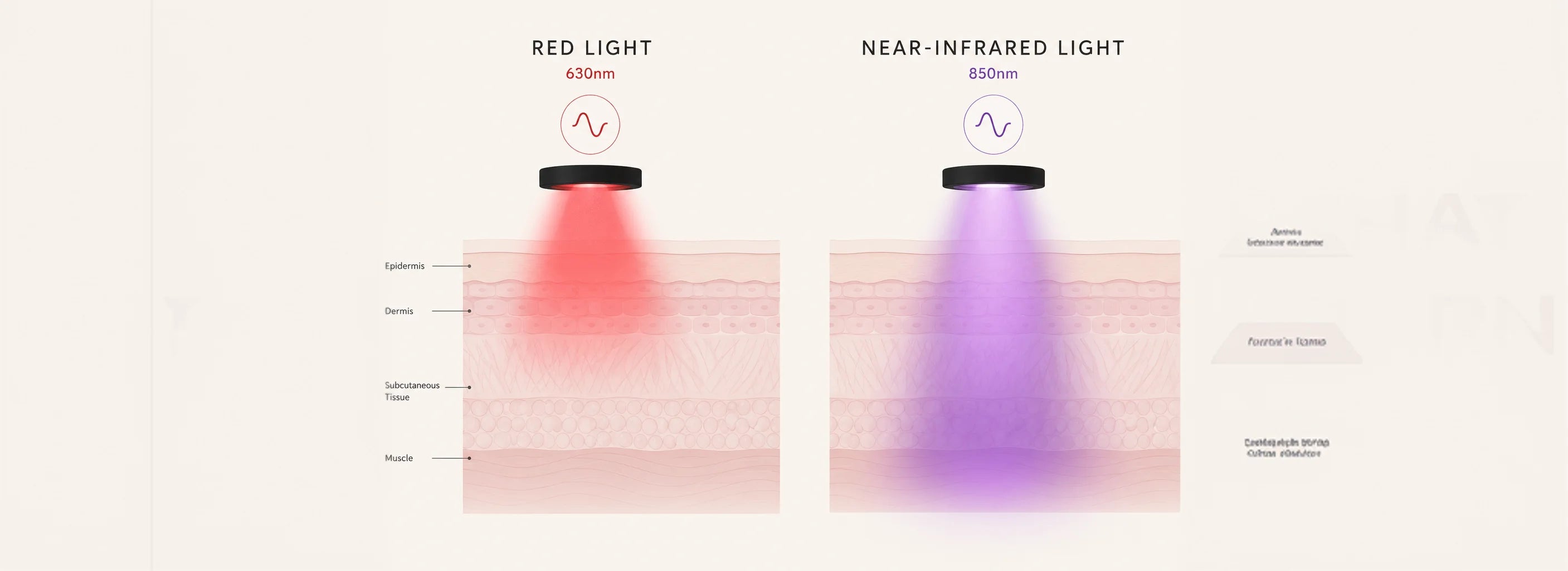
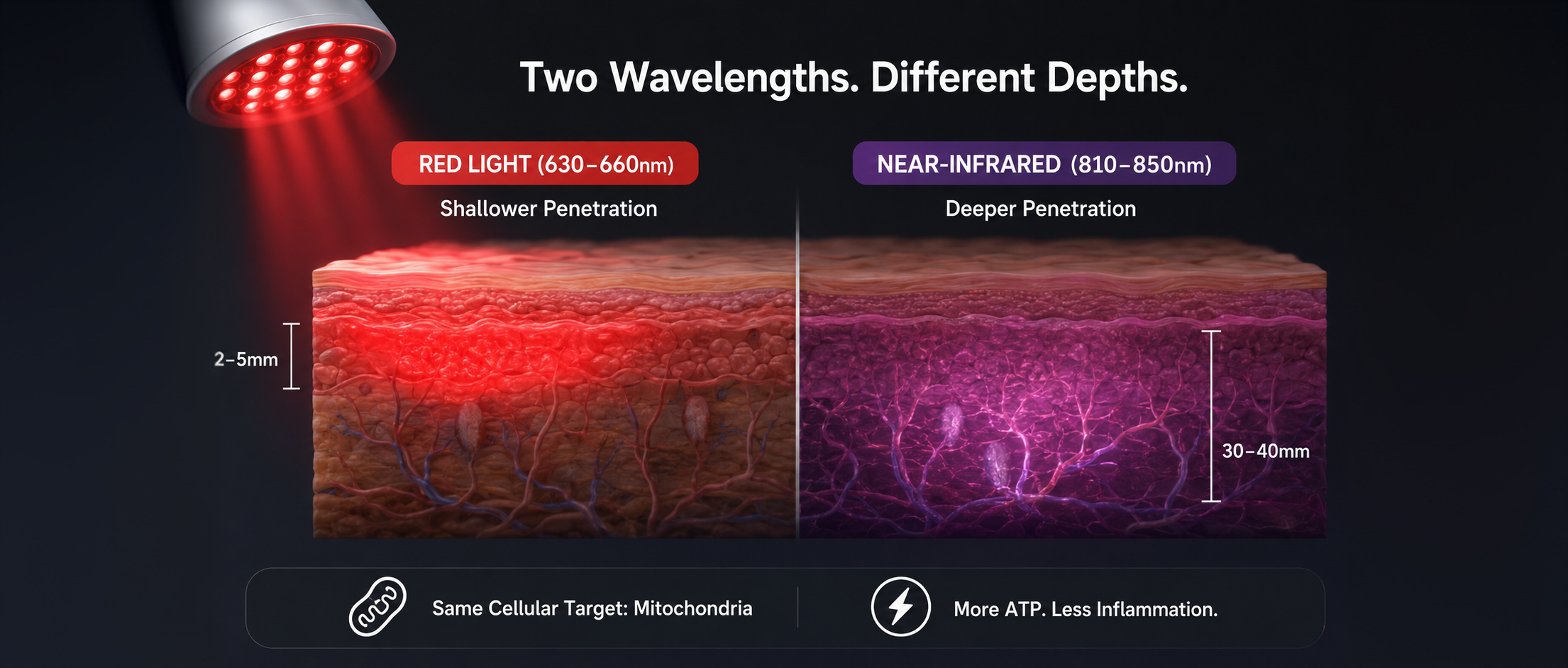
Red light (630–660nm): Visible. You can see the deep red glow when the device is on. Penetrates roughly 2–5mm into the skin — enough to reach the epidermis, dermis, and superficial follicles.
Near-infrared (NIR) light (810–850nm): Invisible. You won't see it, though you may feel mild warmth. Penetrates significantly deeper — up to 30–40mm — reaching muscle tissue, joint structures, and deeper follicular anatomy.
Both wavelengths are absorbed by the same target inside cells: cytochrome c oxidase in the mitochondria. The biological mechanism is the same — increased ATP production, nitric oxide release, reduced oxidative stress (Hamblin, 2017). The difference is where that mechanism activates, which depends entirely on penetration depth.
Red light therapy uses two bands within this range:
Red light (630–660nm): Visible. You can see the deep red glow when the device is on. Penetrates roughly 2–5mm into the skin — enough to reach the epidermis, dermis, and superficial follicles.
Near-infrared (NIR) light (810–850nm): Invisible. You won't see it, though you may feel mild warmth. Penetrates significantly deeper — up to 30–40mm — reaching muscle tissue, joint structures, and deeper follicular anatomy.
Both wavelengths are absorbed by the same target inside cells: cytochrome c oxidase in the mitochondria. The biological mechanism is the same — increased ATP production, nitric oxide release, reduced oxidative stress (Hamblin, 2017). The difference is where that mechanism activates, which depends entirely on penetration depth.
Matching wavelengths to goals
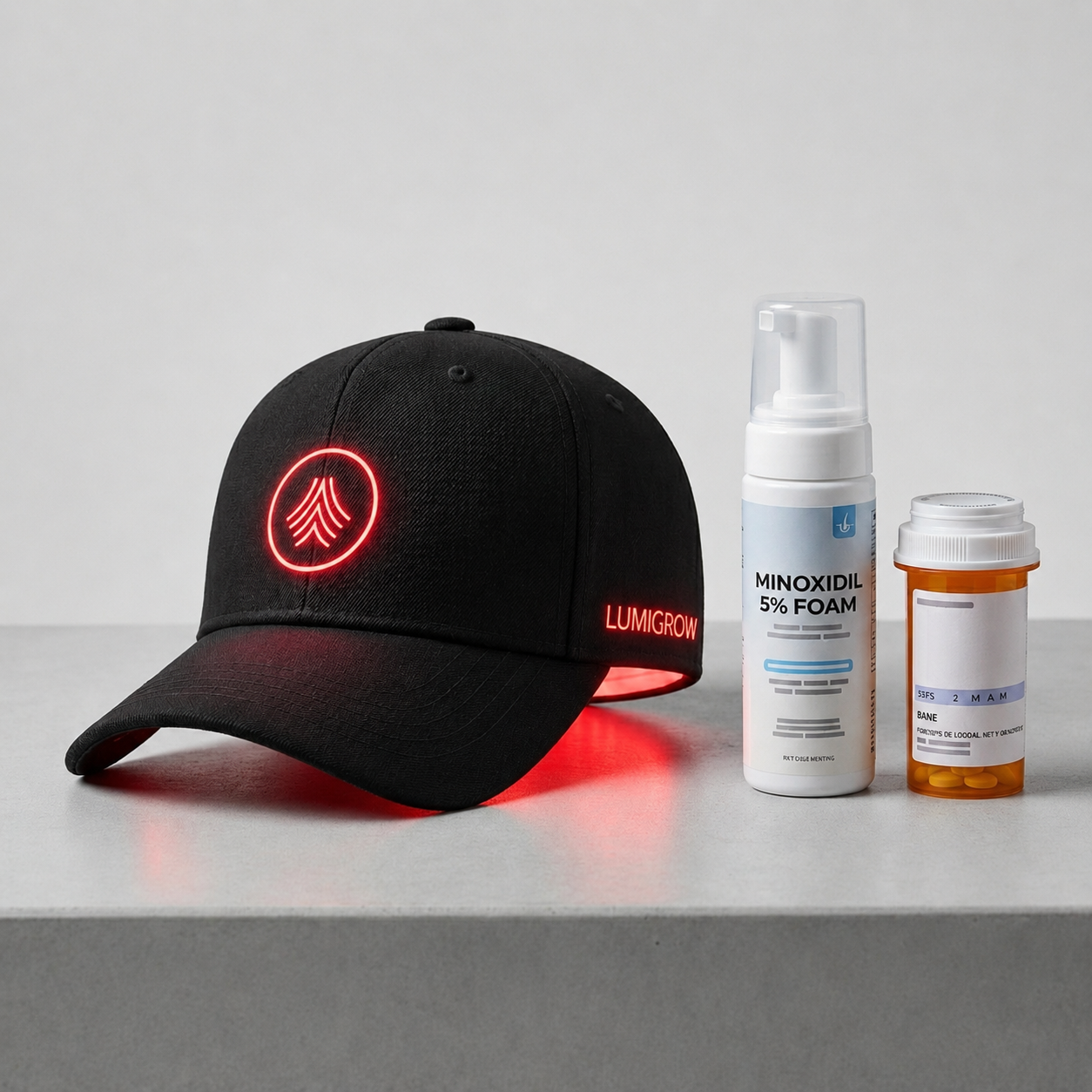
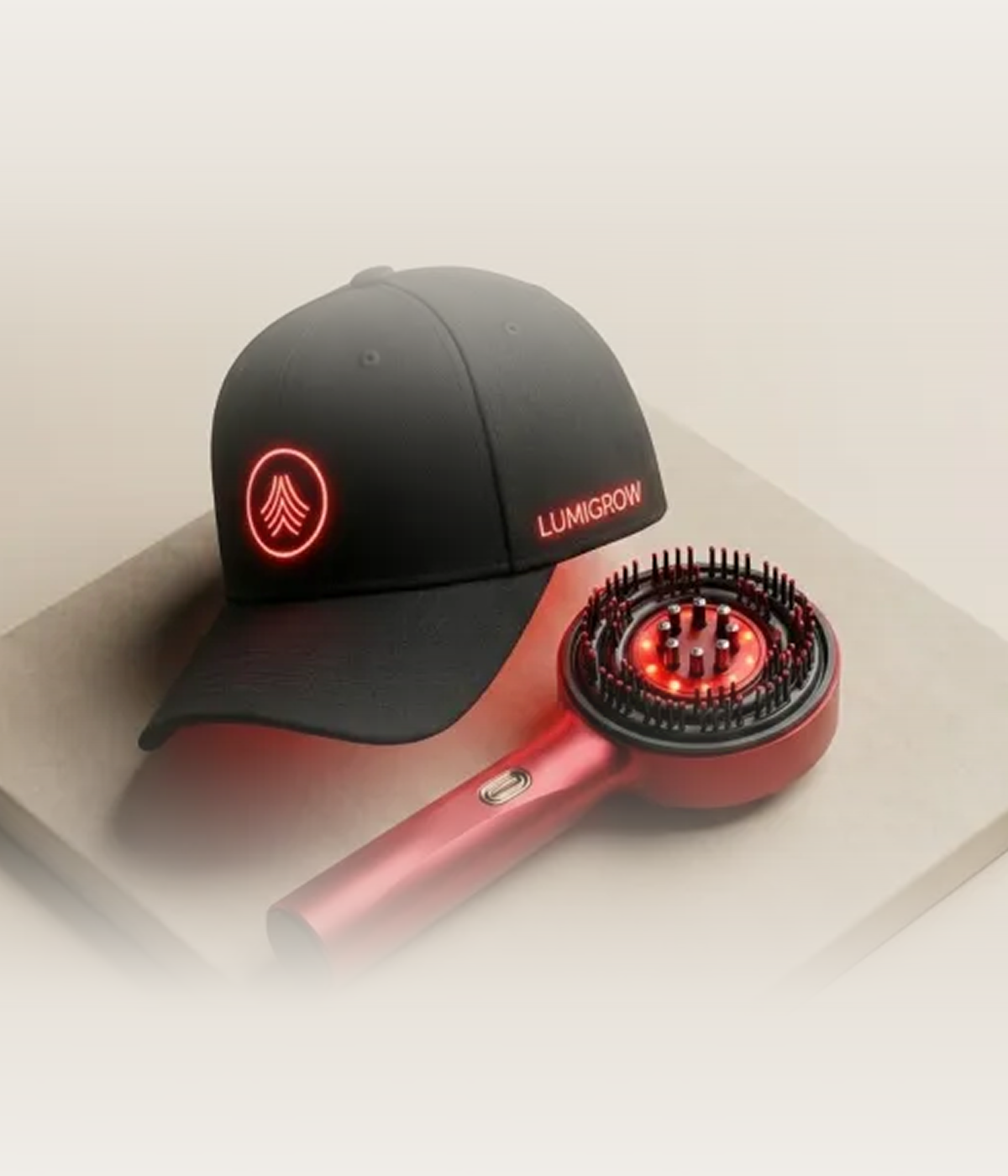
Hair growth (scalp): The most-validated wavelength is 650–655nm. The Lanzafame RCTs used 655nm and achieved FDA clearance at that wavelength (Lanzafame, 2013). Adding 850nm NIR provides deeper penetration to reach the follicle bulge where stem cells reside. The Lumigrow Cap uses dual 630nm + 850nm for this reason.
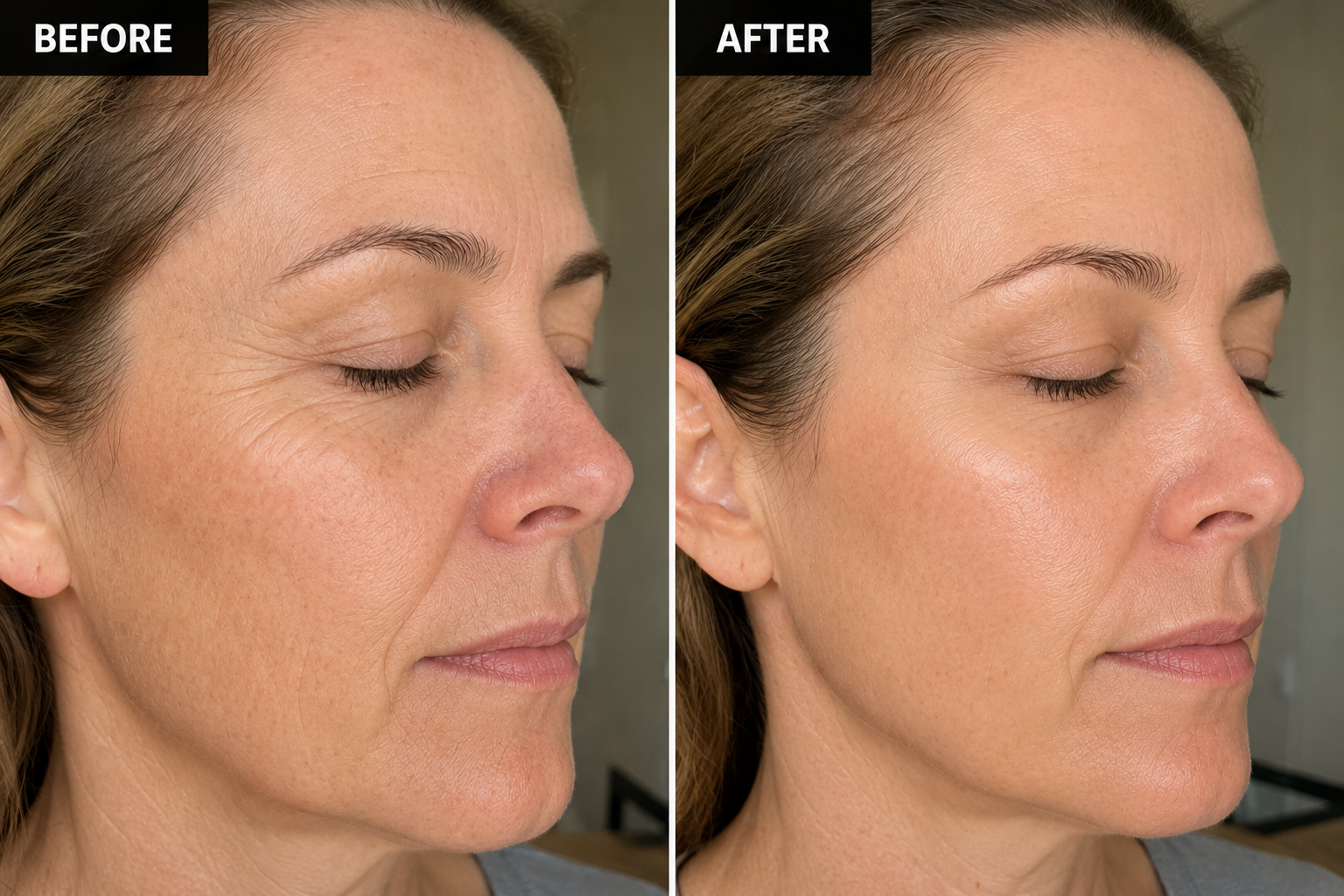
Skin rejuvenation (face): The Wunsch & Matuschka trial used 633nm + 830nm and found significant collagen density increases and wrinkle reduction (Wunsch & Matuschka, 2014). The combination targets both surface-level collagen (dermis, reached by 633nm) and deeper connective tissue (reached by 830nm). The Red Light Face Mask delivers both wavelengths simultaneously.
Muscle recovery: Deeper penetration matters here — muscle tissue sits below skin and subcutaneous fat. 850nm NIR is the primary therapeutic wavelength for muscle recovery, as confirmed by Ferraresi et al.'s systematic review (Ferraresi, 2012). The Red Light Panel delivers both 630nm (surface circulation) and 850nm (deep tissue) at high power density.
Joint pain and inflammation: Joints sit deep — often 15mm+ beneath the skin surface. 810–850nm NIR is essential here. 630nm red light alone won't penetrate far enough to reach knee cartilage or hip joint structures. The anti-inflammatory effects documented by Hamblin (2017) and Cotler et al. (2015) are primarily driven by NIR wavelengths.
Under-eye puffiness and dark circles: The skin around the eyes is the thinnest on the body — roughly 0.5mm. 630nm red light is ideal here because deep penetration isn't needed and the target (superficial vasculature and lymphatic drainage) is close to the surface. The Red Light Eye Bag Glasses use focused 630nm for this application.
Skin rejuvenation (face): The Wunsch & Matuschka trial used 633nm + 830nm and found significant collagen density increases and wrinkle reduction (Wunsch & Matuschka, 2014). The combination targets both surface-level collagen (dermis, reached by 633nm) and deeper connective tissue (reached by 830nm). The Red Light Face Mask delivers both wavelengths simultaneously.
Muscle recovery: Deeper penetration matters here — muscle tissue sits below skin and subcutaneous fat. 850nm NIR is the primary therapeutic wavelength for muscle recovery, as confirmed by Ferraresi et al.'s systematic review (Ferraresi, 2012). The Red Light Panel delivers both 630nm (surface circulation) and 850nm (deep tissue) at high power density.
Joint pain and inflammation: Joints sit deep — often 15mm+ beneath the skin surface. 810–850nm NIR is essential here. 630nm red light alone won't penetrate far enough to reach knee cartilage or hip joint structures. The anti-inflammatory effects documented by Hamblin (2017) and Cotler et al. (2015) are primarily driven by NIR wavelengths.
Under-eye puffiness and dark circles: The skin around the eyes is the thinnest on the body — roughly 0.5mm. 630nm red light is ideal here because deep penetration isn't needed and the target (superficial vasculature and lymphatic drainage) is close to the surface. The Red Light Eye Bag Glasses use focused 630nm for this application.
Why dual-wavelength devices outperform single-wavelength
A 2025 review of LLLT parameters for skin rejuvenation noted that dual-wavelength devices (combining red + NIR) produced more consistent results than single-wavelength devices across multiple clinical endpoints (SCIRP, 2025).
The logic is straightforward: biological processes happen at multiple tissue depths simultaneously. Surface-level collagen synthesis benefits from 630nm. Deeper inflammatory modulation benefits from 850nm. A device that delivers both treats the full tissue column rather than just one layer.
This is why all five Wellness Biohacker devices use dual-wavelength configurations rather than single-wavelength LEDs.
The logic is straightforward: biological processes happen at multiple tissue depths simultaneously. Surface-level collagen synthesis benefits from 630nm. Deeper inflammatory modulation benefits from 850nm. A device that delivers both treats the full tissue column rather than just one layer.
This is why all five Wellness Biohacker devices use dual-wavelength configurations rather than single-wavelength LEDs.
Disclaimer
The content provided in this blog is for informational and educational purposes only. It is not intended to be a substitute for professional medical advice, diagnosis, or treatment.
Recent Posts


Browse Related Products

Join The Red Light Reset
Get science-backed skincare insights, expert guides, and early access to new device launches.
No spam. Just clinically-informed education and member-only benefits