

Home
/
Blogs
/
Hair Growth
/
Does Red Light Therapy Actually Regrow Hair?
5 min read
Does Red Light Therapy Actually Regrow Hair? Here's What the Studies Found
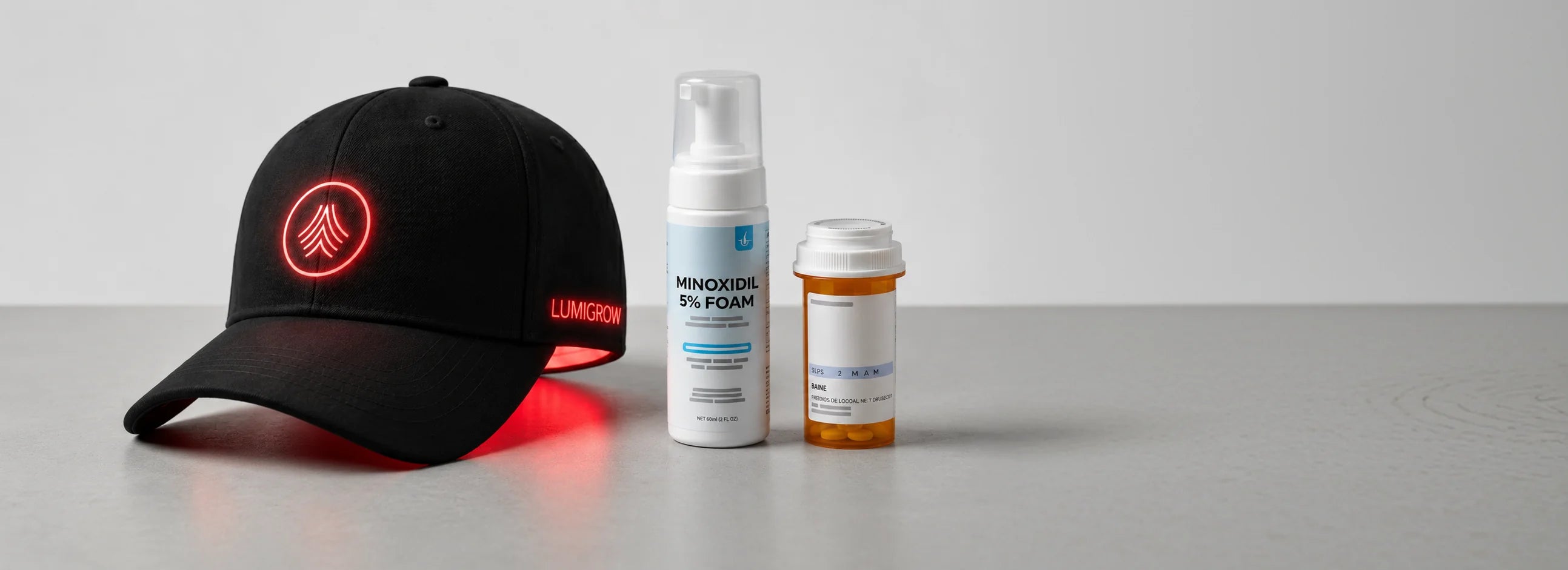
Hair loss affects roughly 50% of men over 40. For decades, the options have been minoxidil, finasteride, or surgery — all with trade-offs. Over the past ten years, a fourth option has built a real evidence base: low-level light therapy (LLLT), commonly called red light therapy.
Here's what the research actually says-
Let's break it down
How it works
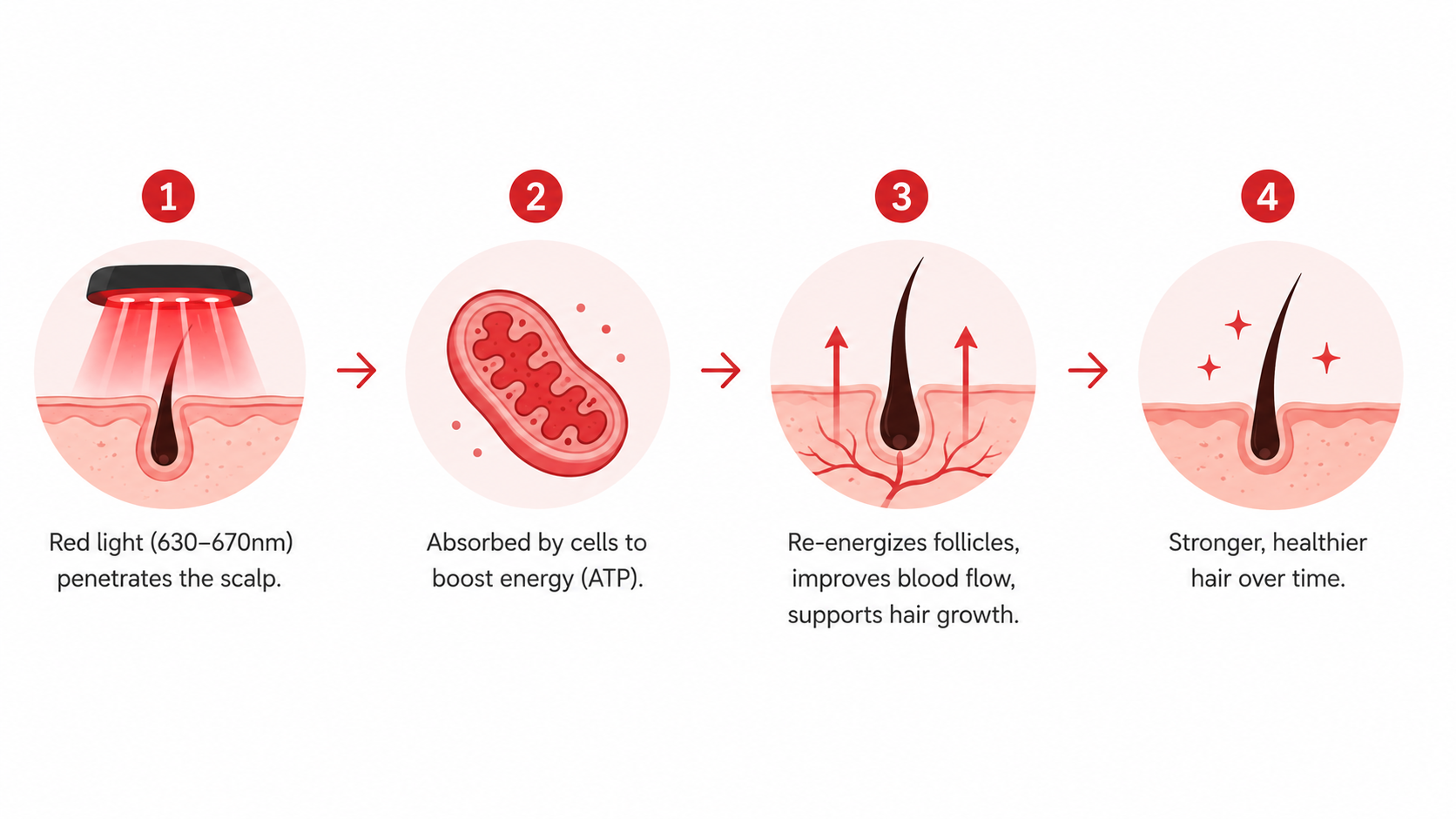
LLLT uses specific wavelengths of red light (630–670nm) to penetrate the scalp and stimulate cellular activity at the hair follicle. The light is absorbed by an enzyme called cytochrome c oxidase inside the mitochondria, triggering increased ATP production, nitric oxide release, and reduced oxidative stress.
In plain terms: it re-energizes weakened follicles, extends the growth phase of the hair cycle, and improves blood flow to the scalp — the same vasodilation mechanism that makes minoxidil work.
The research dates back to the 1960s, when a scientist studying whether light caused cancer in mice accidentally discovered they grew more hair instead.
Important caveat: LLLT works on dormant but living follicles. Areas that have been completely bald for years — where follicles are destroyed — will not respond.
In plain terms: it re-energizes weakened follicles, extends the growth phase of the hair cycle, and improves blood flow to the scalp — the same vasodilation mechanism that makes minoxidil work.
The research dates back to the 1960s, when a scientist studying whether light caused cancer in mice accidentally discovered they grew more hair instead.
Important caveat: LLLT works on dormant but living follicles. Areas that have been completely bald for years — where follicles are destroyed — will not respond.
What the clinical trials show
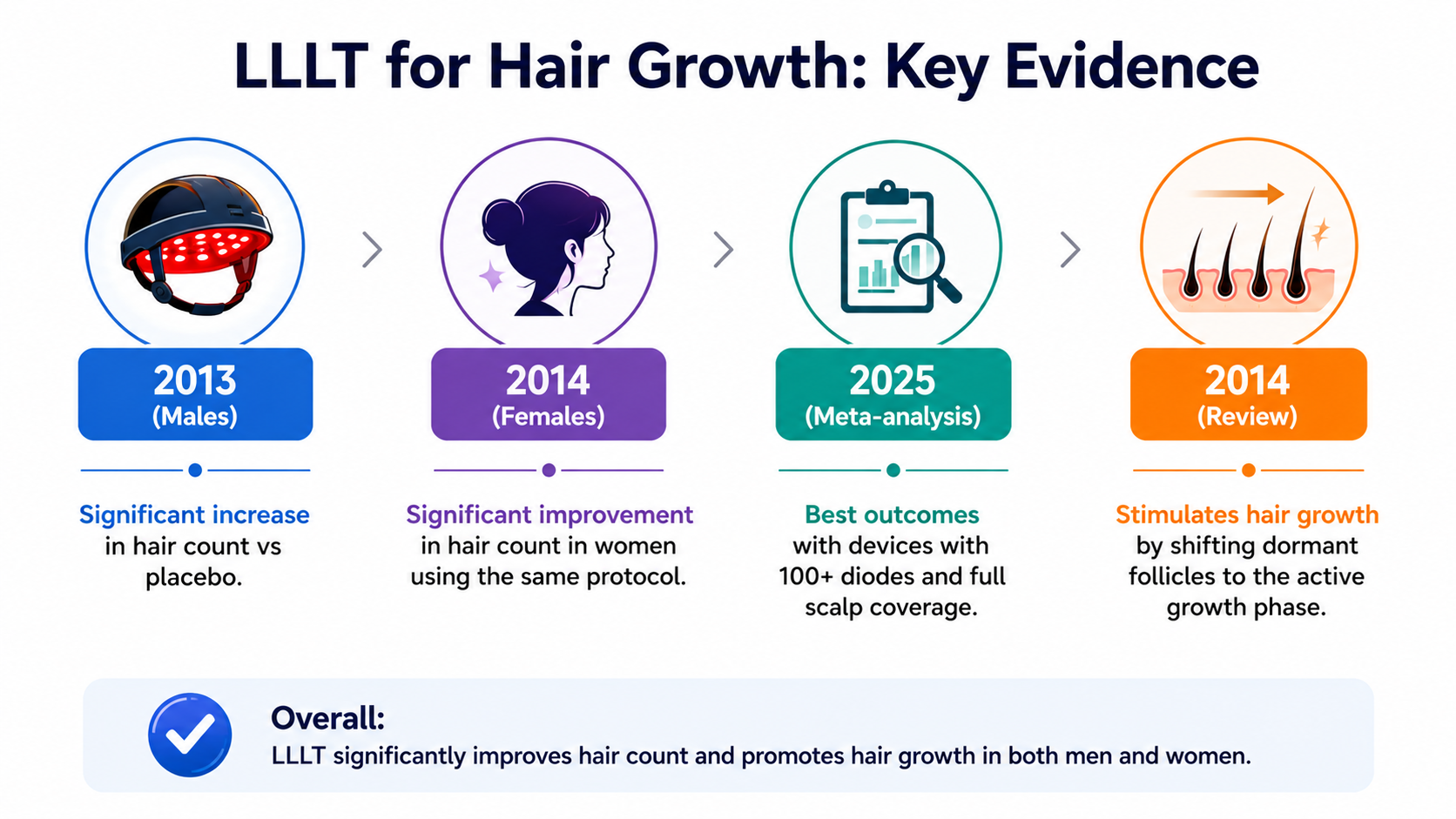
Lanzafame et al., 2013 (males): 44 men with pattern hair loss used a 655nm helmet device every other day for 16 weeks. The treatment group showed a statistically significant increase in hair count versus placebo. This study led to FDA 510(k) clearance. (PubMed)
Lanzafame et al., 2014 (females): The female arm of the same trial confirmed significant hair count improvements in women using the same protocol. (Wiley)
2025 meta-analysis: A systematic review of all FDA-cleared home-use LLLT devices found that the majority of treatment groups showed statistically significant improvement versus control. Devices with 100+ diodes and full scalp coverage produced the best outcomes. (JCAD)
Avci et al., 2014 (Harvard/Wellman Center): The most-cited review in the field concluded that LLLT stimulated hair growth in both men and women, primarily by shifting dormant follicles into the active growth phase. (PMC)
Lanzafame et al., 2014 (females): The female arm of the same trial confirmed significant hair count improvements in women using the same protocol. (Wiley)
2025 meta-analysis: A systematic review of all FDA-cleared home-use LLLT devices found that the majority of treatment groups showed statistically significant improvement versus control. Devices with 100+ diodes and full scalp coverage produced the best outcomes. (JCAD)
Avci et al., 2014 (Harvard/Wellman Center): The most-cited review in the field concluded that LLLT stimulated hair growth in both men and women, primarily by shifting dormant follicles into the active growth phase. (PMC)
Realistic expectations
At 16 weeks: The Lanzafame studies showed 37–39% increases in hair count. In early-to-moderate thinning, this is visually meaningful — less visible scalp, stronger-feeling hair, reduced shedding.
When you stop: The effects stop. This is a maintenance therapy, not a one-time fix — similar to minoxidil.
Side effects: Essentially none. The research lists only mild, temporary scalp redness or warmth. No systemic side effects have been reported in published trials.
Best candidates: People with early-to-moderate thinning, willing to use the device consistently (daily or every other day). The American Hair Loss Association recommends choosing FDA-cleared devices with medical-grade laser diodes over budget LED-only caps.
When you stop: The effects stop. This is a maintenance therapy, not a one-time fix — similar to minoxidil.
Side effects: Essentially none. The research lists only mild, temporary scalp redness or warmth. No systemic side effects have been reported in published trials.
Best candidates: People with early-to-moderate thinning, willing to use the device consistently (daily or every other day). The American Hair Loss Association recommends choosing FDA-cleared devices with medical-grade laser diodes over budget LED-only caps.
How to use the Lumigrow Cap
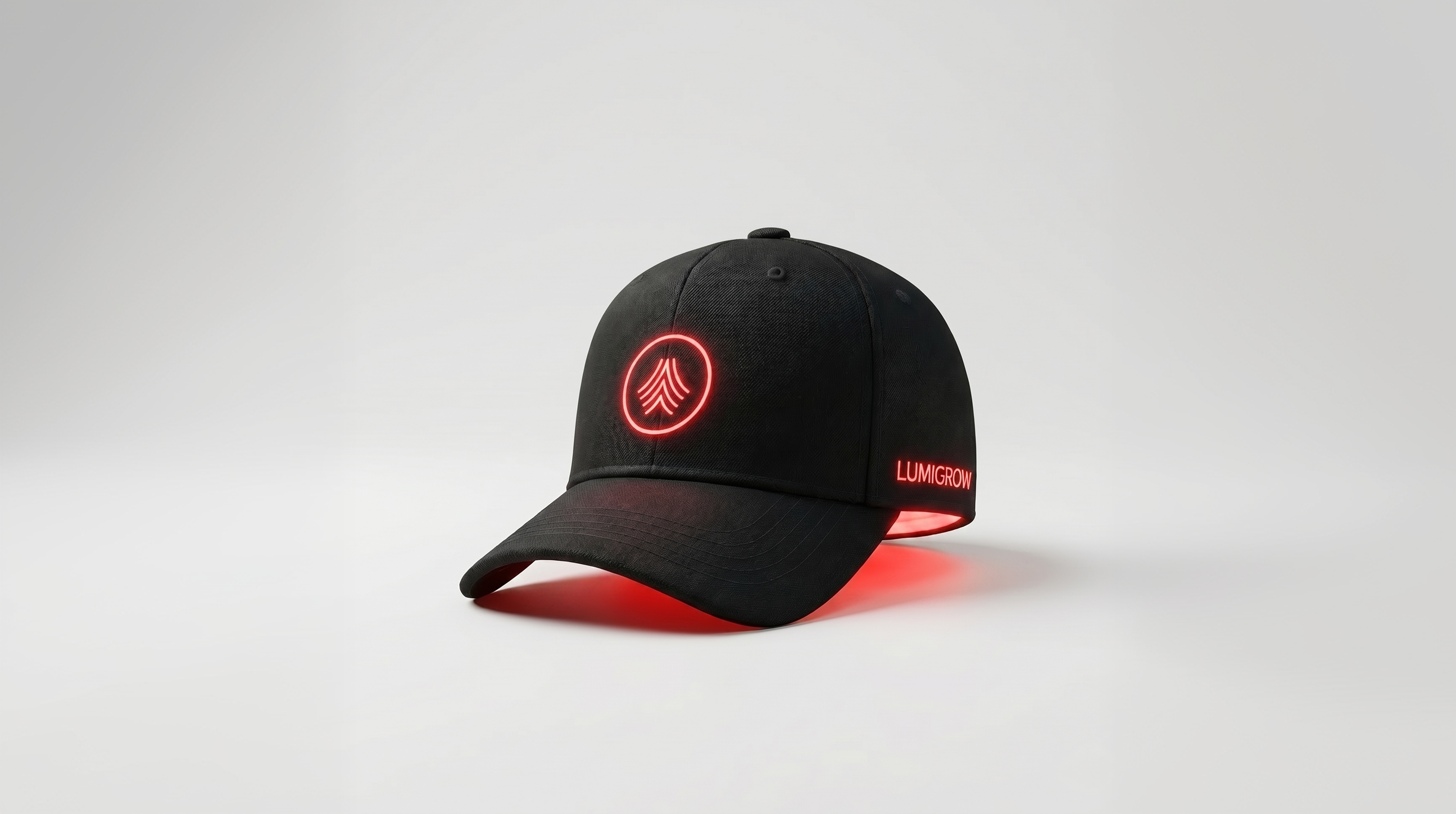
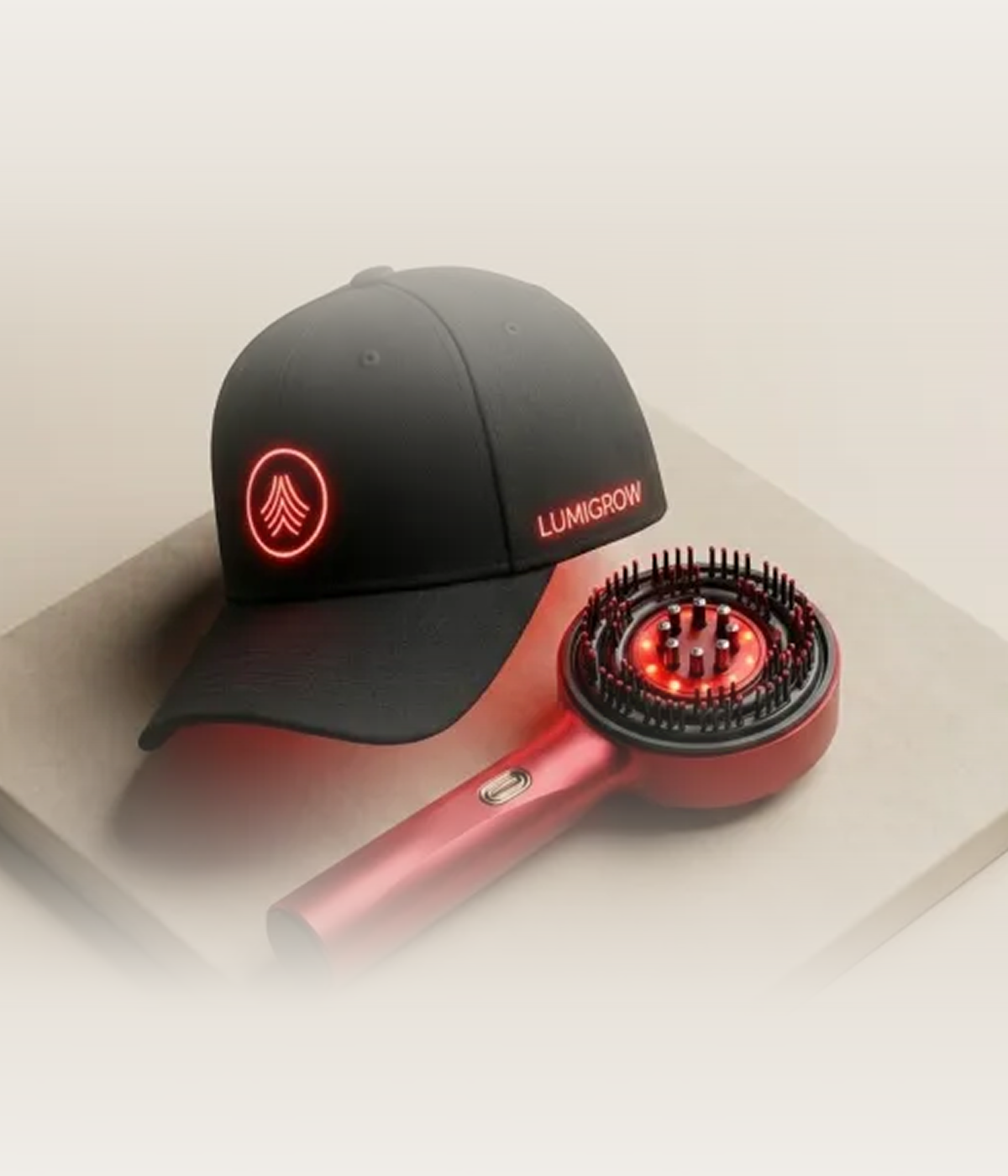
The Lumigrow Cap delivers 272 medical-grade LEDs at dual wavelengths (630nm + 850nm) with full scalp coverage — the configuration the 2025 meta-analysis links to the best clinical outcomes.
Protocol: 15–20 minutes daily or every other day. It's wireless and hands-free — wear it while working, reading, or relaxing.
Weeks 1–4: No visible change yet. Some temporary shedding is normal as resting hairs make way for new growth.
Weeks 5–12: Shedding normalizes. First visible improvements begin — typically around weeks 9–12.
Months 4–6: Most noticeable gains. Take comparison photos monthly under the same lighting.
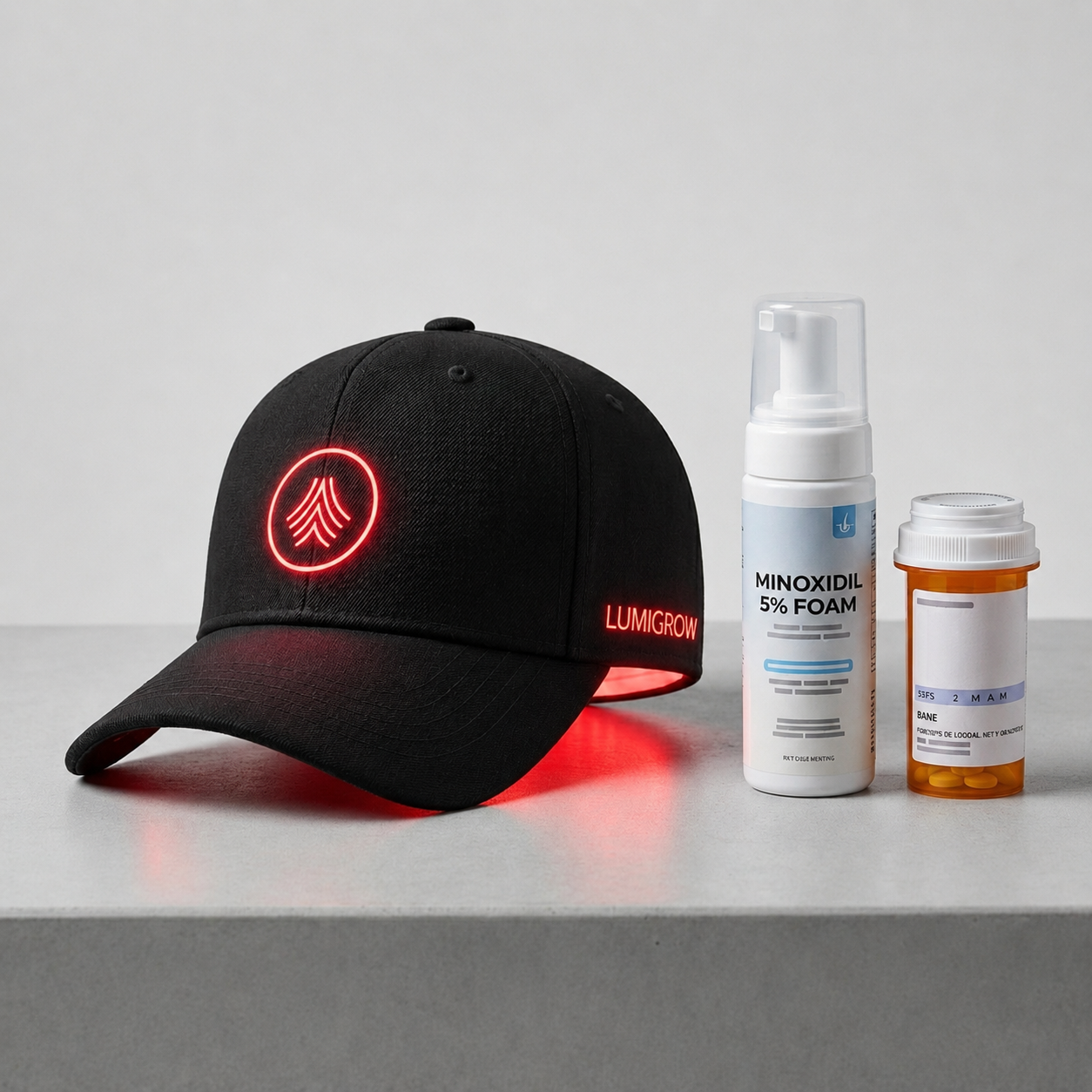
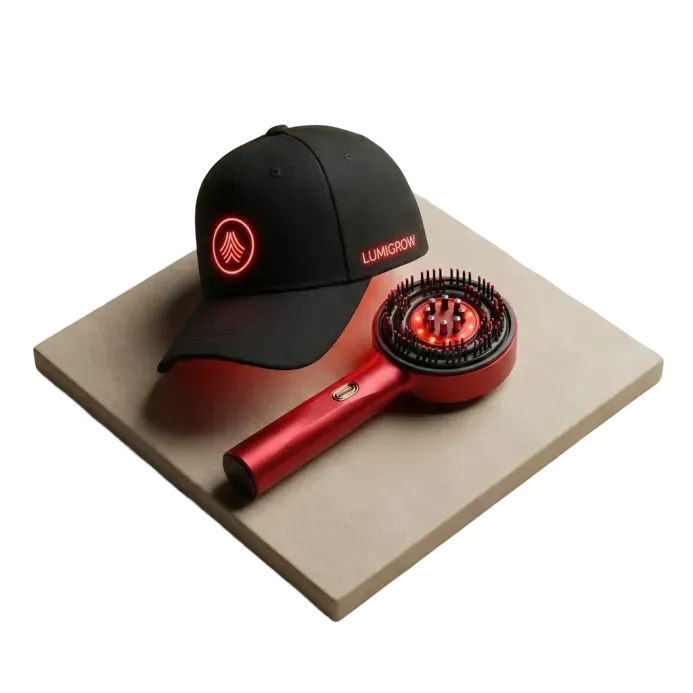
For enhanced circulation, pair it with the Red Light Scalp Massager. LLLT can also be combined with minoxidil or finasteride since they work through different mechanisms — consult your dermatologist.
Protocol: 15–20 minutes daily or every other day. It's wireless and hands-free — wear it while working, reading, or relaxing.
Weeks 1–4: No visible change yet. Some temporary shedding is normal as resting hairs make way for new growth.
Weeks 5–12: Shedding normalizes. First visible improvements begin — typically around weeks 9–12.
Months 4–6: Most noticeable gains. Take comparison photos monthly under the same lighting.
For enhanced circulation, pair it with the Red Light Scalp Massager. LLLT can also be combined with minoxidil or finasteride since they work through different mechanisms — consult your dermatologist.
Disclaimer
The content provided in this blog is for informational and educational purposes only. It is not intended to be a substitute for professional medical advice, diagnosis, or treatment.
Recent Posts


Browse Related Products

Join The Red Light Reset
Get science-backed skincare insights, expert guides, and early access to new device launches.
No spam. Just clinically-informed education and member-only benefits